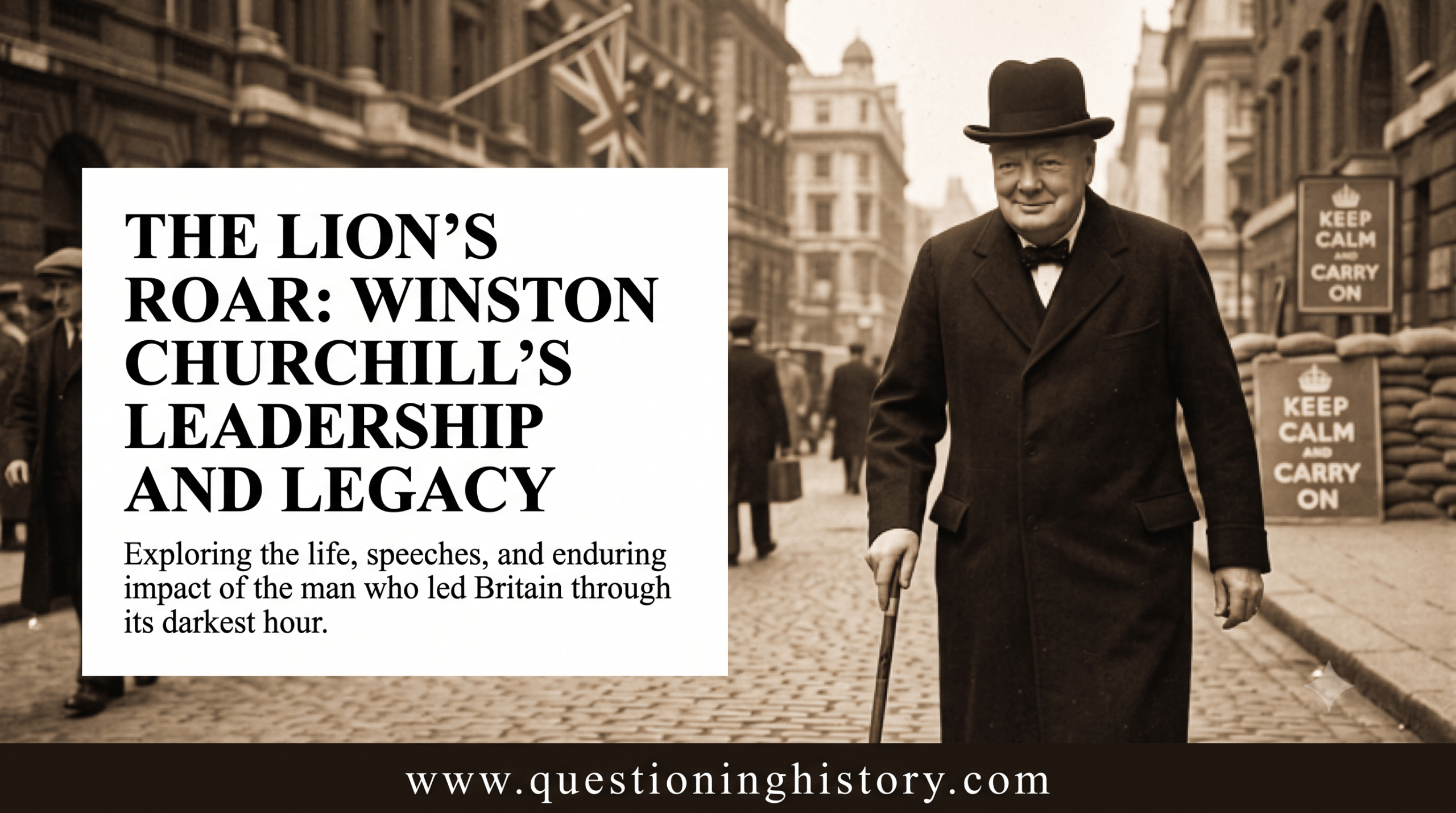
Inside the Mind of the British Lion: An Exclusive Confrontation With Sir Winston Churchill
History remembers leaders who guided nations through dark storms, yet few figures stand as large or as controversial as Sir Winston Churchill. Welcome to an extraordinary, deep-dive historical exploration where we bypass the polished statues to grill the flesh-and-blood man behind the myth.
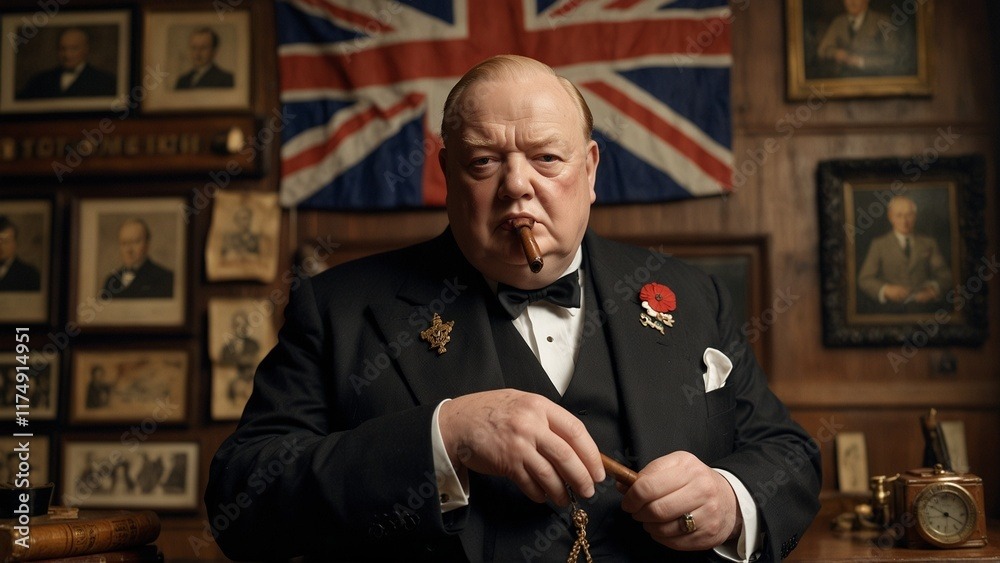
Our interviewer, Interrogator, known for a relentless, forensic questioning style, sits down with the British wartime leader. In this fictional clash, we break down the military disasters, the imperial policies, and the political survival tactics that shaped the modern world. Expect zero spin, absolute candor, and a fierce cross-examination of Britain’s most celebrated twentieth-century prime minister.
The Ghost of Gallipoli and Early Failures
Interrogator: Sir Winston, you are widely celebrated for your defiance during the Second World War, but your early career was littered with staggering errors. Let us look at 1915. Your disastrous Dardanelles campaign led to the slaughter of thousands of Allied soldiers at Gallipoli. How can you justify such a reckless operational gamble that nearly destroyed your political future?
Sir Winston Churchill: The Dardanelles campaign was not a reckless gamble; rather, it was a bold strategic concept designed to break a terrible deadlock. Truly, the war on the Western Front was a meat-grinder of trench warfare, consuming an entire generation of young men. My plan sought to outflank the enemy by knocking the Ottoman Empire out of the conflict, which would have opened a vital sea route to Russia. Consequently, the failure lay not in the design, but in the execution by hesitant generals and admirals who lacked the nerve to push through.
Interrogator: Moving past the military disasters, your economic record is equally troubled. You returned Britain to the Gold Standard in 1924 while serving as Chancellor of the Exchequer. Economists argue this decision directly triggered mass unemployment and the devastating General Strike of 1926. Do you accept that your economic judgment was fundamentally flawed?
Sir Winston Churchill: It is true that returning to the Gold Standard caused immense economic friction, yet it was the orthodox financial wisdom of the era. Treasury experts and the Bank of England heavily advised me that restoring the pre-war gold parity would stabilize our international trade. Nevertheless, I discovered to my cost that financiers are often blind to the realities of the working class. While I regret the subsequent industrial strife and the hardship it brought, my primary motive was always to uphold the global financial prestige of the British Empire.
The Wilderness Years and the Fight for Rearmament
Interrogator: Let us turn to the 1930s, your famous “wilderness years.” You spent a decade isolated from cabinet power, fiercely warning against the rise of Nazi Germany. Despite your prophetic words, your critics claimed you were simply a warmonger looking for a fight to remain politically relevant. Were you truly motivated by national survival, or was it a desperate bid for personal glory?
Sir Winston Churchill: Anyone who looked at Germany in those years could see a dark cloud gathering over Europe. My warnings were not born out of a desire for personal glory, but from a terrifying, clear-eyed reading of Adolf Hitler’s intentions. While my colleagues chose the comfortable, blind path of appeasement, I chose to speak the brutal truth about German rearmament. It is a lonely thing to stand against the tide, but events eventually vindicated my stubbornness. Survival requires looking at the world as it is, not how you wish it to be.
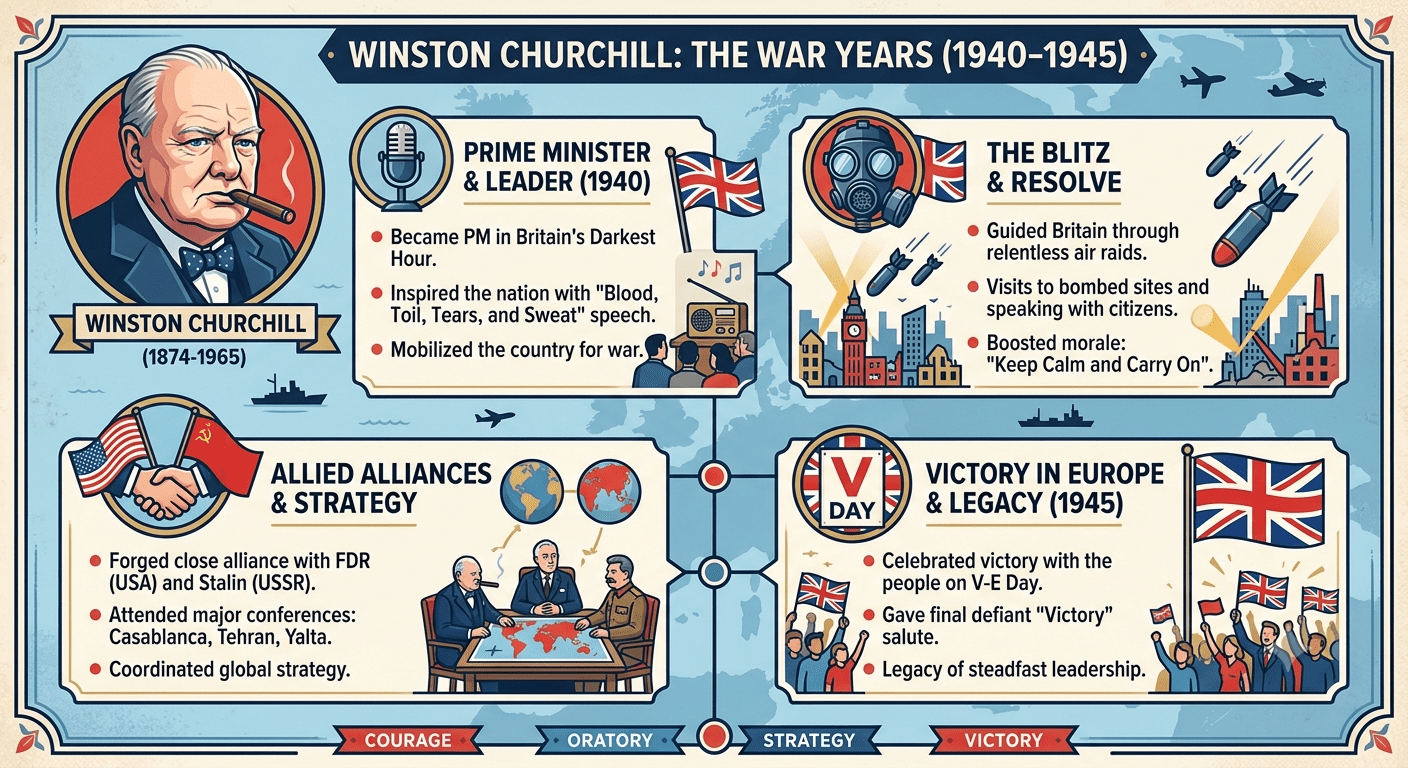
Interrogator: You finally achieved ultimate power in May 1940 as Prime Minister, during Britain’s darkest hour. However, your own political survival hung by a thread, and behind closed doors, members of your war cabinet wanted to negotiate peace with Germany through Italy. How close did Britain actually come to striking a deal with Hitler?
Sir Winston Churchill: The pressure to negotiate was intense, particularly from Lord Halifax, who believed a diplomatic compromise could save the British Empire. However, I knew with absolute certainty that any treaty signed with Hitler would reduce our island to a mere slave state. We debated the issue fiercely within the war cabinet, yet I remained totally unyielding against surrender. If this long island story of ours was to end, it was far better that it should end only when each of us lay choking in his own blood upon the ground.
Total War and the Morality of Victory
Interrogator: Your wartime leadership was defined by total war, which brought massive moral compromises. Under your direction, the Royal Air Force engaged in the area bombing of German cities like Dresden, killing tens of thousands of civilians. Was this campaign a legitimate military necessity, or was it an act of terror that blurred the lines between the Allies and the enemy?
Sir Winston Churchill: We were locked in a mortal struggle against a regime of unparalleled depravity, which left us no room for half-measures. Germany had initiated the blitz against our cities, and our response was aimed at shattering their industrial capacity and war machine. While the loss of civilian life is always a tragedy, the area bombing campaign severely disrupted their supply lines and drew vital resources away from the Eastern Front. To defeat total evil, one must use total force, and history must judge us by the monstrous horrors we successfully prevented.
Interrogator: Let us confront another deeply uncomfortable chapter of your premiership. In 1943, the Bengal famine resulted in the deaths of up to three million people under British rule. You have been heavily criticized for prioritizing shipping lines for Allied soldiers over food relief for starving Indian citizens. Why did you allow millions to die in Bengal while shipping grain elsewhere?
Sir Winston Churchill: The famine in Bengal was a horrific catastrophe born out of the chaos of global warfare. Japanese forces had conquered Burma, which completely cut off our primary grain supply to India, while regional hoarding made the crisis far worse. At that very moment, our global shipping networks were strained to the absolute limit by U-boat attacks. Despite these massive military challenges, we did send hundreds of thousands of tons of grain, though it was tragically insufficient. My supreme duty was the defeat of the Axis powers, without which all free nations, including India, would have fallen into permanent darkness.
The Cold War and the Squeezed British Empire
Interrogator: Following your victory in 1945, the British electorate immediately voted you out of office in a landslide victory for the Labour Party. You went from being the savior of the nation to a political castaway within weeks. How deeply did that rejection sting, and did it shake your faith in British democracy?
Sir Winston Churchill: The result was a profound shock, especially since it came right on the heels of our triumph over tyranny. Walking through Whitehall to the cheers of the crowd, I never imagined they would dismiss me so swiftly at the ballot box. However, I realized that the people were exhausted by years of sacrifice and desired a completely new domestic focus. Democracy is a fickle mistress, but it is precisely what we fought so hard to defend. I accepted their verdict with a heavy heart, knowing that history would eventually do me justice.
Interrogator: In 1946, you delivered your famous “Iron Curtain” speech in Fulton, Missouri. You warned the world about Soviet expansionism, yet critics argue your aggressive rhetoric helped spark the decades-long Cold War. Did you actively fan the flames of conflict with the Soviet Union out of an inability to adapt to a peaceful world order?
Sir Winston Churchill: Peace cannot be maintained through weakness, nor can it be secured by ignoring the steady advance of tyranny. Joseph Stalin was systematically crushing democratic freedoms across Eastern Europe, creating a closed sphere of communist control. My speech at Fulton was simply a realistic warning to the Western allies about the new dangers we faced. By establishing a strong, united front between the English-speaking peoples, we prevented a third world war rather than causing one.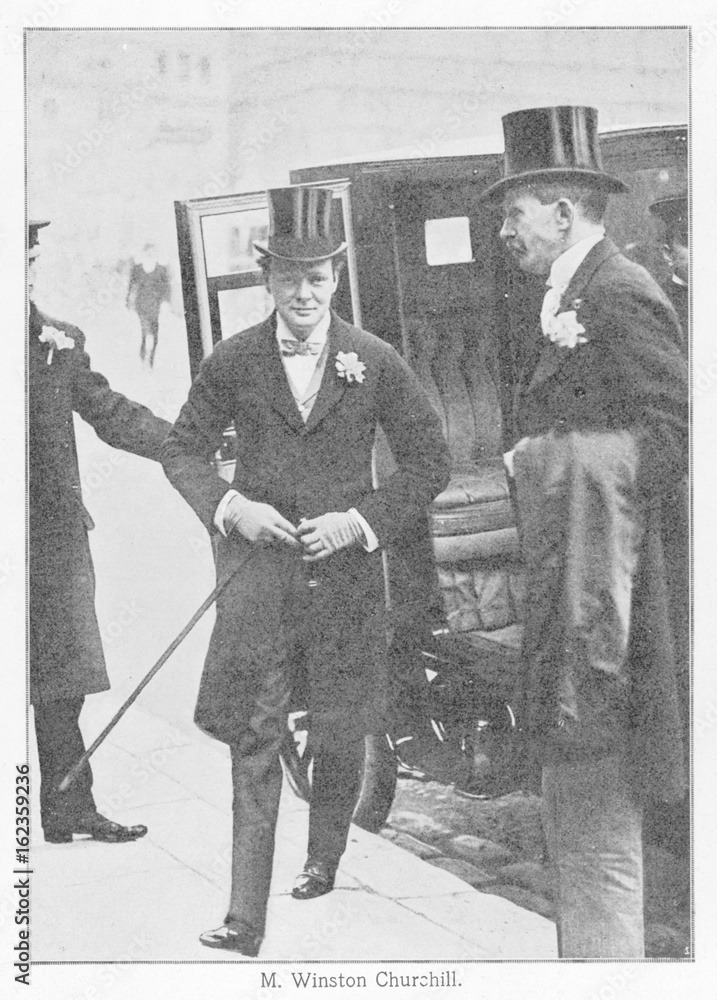
Sunset of an Empire and Historical Legacy
Interrogator: You returned as Prime Minister for a second term in 1951, during which you fought bitterly against the dismantling of the British Empire. You resisted independence movements in Kenya and Malaya with harsh military crackdowns. Why were you so desperately blind to the inevitable tide of global decolonization?
Sir Winston Churchill: I spent my entire life serving the global mission of Britain, and I could not easily watch that great structure be dismantled. My resistance was not born out of blindness, but from a genuine fear that a rapid withdrawal would lead to widespread tribal violence and communist subversion. In places like Kenya, we faced brutal insurgencies that threatened basic law and order, requiring a firm military response. I believed that British rule brought stability, law, and justice, and I wished to ensure those values endured.
Interrogator: Sir Winston, your long life was defined by intense, unyielding ambition, yet you also suffered from deep bouts of depression, which you famously termed your “black dog.” Looking back across your ninety years of triumphs and disasters, what was your greatest personal failure?
Sir Winston Churchill: My greatest failure was my inability to preserve the global strength and unity of the British Empire. I successfully led our nation through the most terrible conflict in human history, yet we emerged from it financially exhausted and geographically diminished. We were squeezed between the rising power of the Soviet Union and the massive economic dominance of the United States. While we won the war for civilization, the world that emerged was no longer one where Britain held the reins of destiny.
How Did Winston Churchill Die?
Understanding how did Winston Churchill die requires looking at the final years of the iconic British Prime Minister’s life. The legendary wartime leader passed away on January 24, 1965, at his London home after suffering a severe stroke. While many people ask how did Winston Churchill die, his passing was not sudden; he had been in declining health for over a decade, experiencing a series of smaller strokes before the final, fatal cerebral haemorrhage at the age of 90. Ultimately, when examining the historical details of how did Winston Churchill die, records show he died peacefully, surrounded by his family, exactly 70 years after the death of his own father.
Recommended Resources for Further Research
-
The International Churchill Society
This official digital archive provides an extensive repository of Sir Winston Churchill’s wartime speeches, personal correspondence, and academic essays exploring his political career.
-
Located at Cambridge University, this institution houses the definitive collection of physical papers, journals, and private notes written by the British leader.
-
Imperial War Museums: The Churchill War Rooms
This historic site offers detailed biographical timelines and interactive exhibits detailing the underground bunker where the war cabinet managed the Allied strategy.
Disclaimer: The interview presented above is a historical simulation representing what the editorial team at questioninghistory.com believes the person interviewed may have answered if alive today. The responses are meticulously constructed based on Sir Winston Churchill’s actual memoirs, public speeches, historical documentation, and political writings.