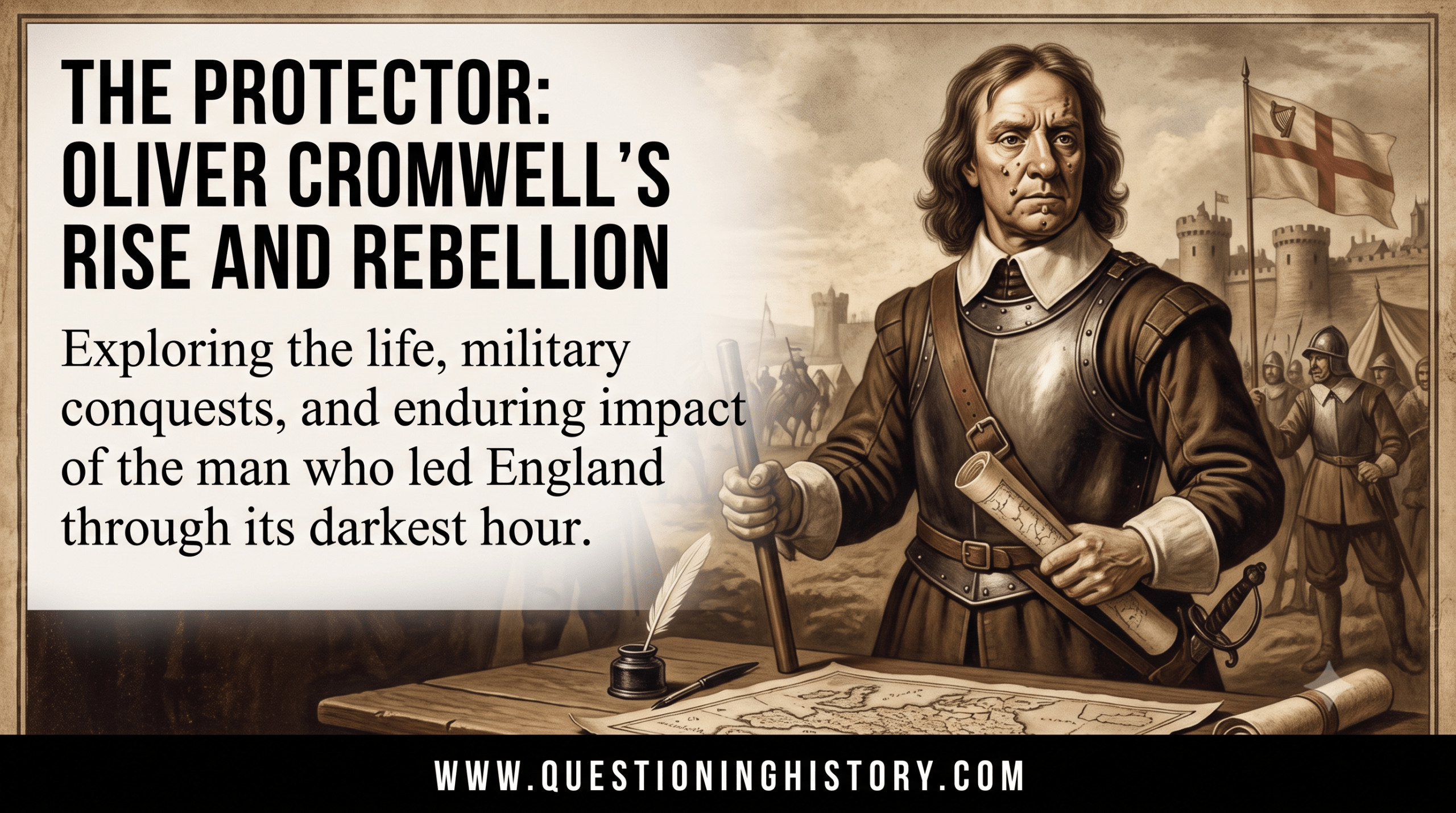
The Lord Protector on the Stand: An Exclusive Interview with Oliver Cromwell
Oliver Cromwell remains one of the most polarizing figures in British history. To some, he was a visionary champion of parliamentary liberty who broke the back of absolute monarchy. To others, he was a brutal military dictator whose hands were stained with royal and civilian blood.
In this Oliver Cromwell interview, we explore the complexities of his character and the impact of his policies on 17th-century England.
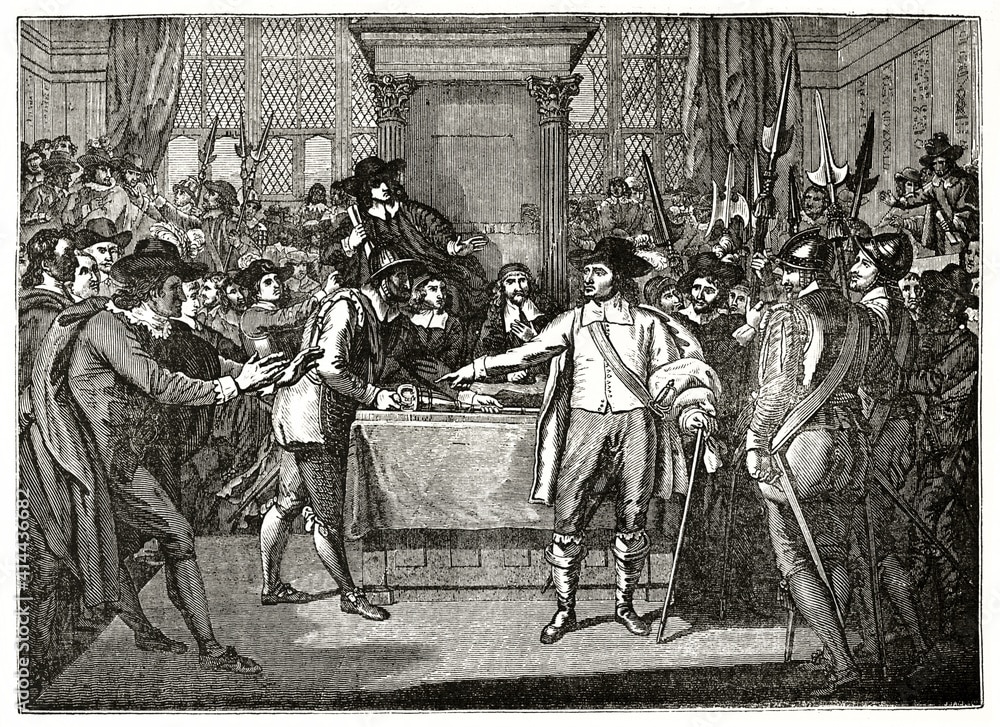
Recently, the Interrogator sat down with the ghost of the Lord Protector to confront him about his bloody campaigns, his religious zealotry, and his dramatic rise to power. Consequently, what follows is a fiery exchange that strips away centuries of historical myth.
This Oliver Cromwell interview aims to shed light on the controversial decisions that defined his reign.
The Execution of King Charles I
Interrogator: Mr. Cromwell, let us begin with the event that shocked the civilized world. You chopped off the head of your own anointed monarch, King Charles I, in 1649. How do you justify committing such a blatant, treasonous act against the crown?
As we delve deeper into this Oliver Cromwell interview, it becomes clear that his actions were driven by a vision of a new England.
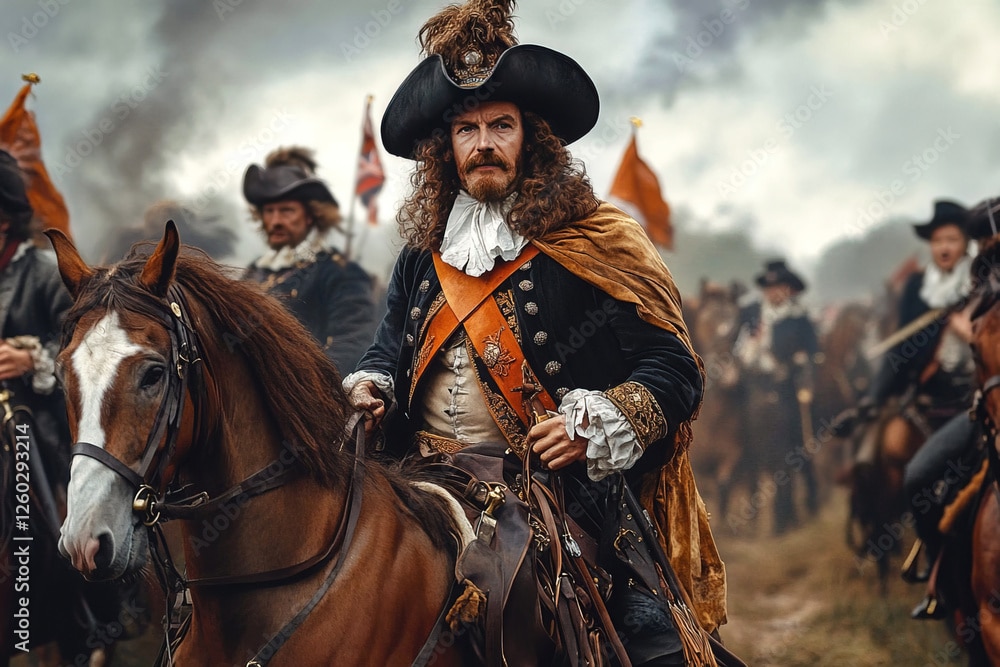
Cromwell: Therefore, you must understand that it was not an act of malice, but a cruel necessity. Charles Stuart was a tyrant who broke his covenant with the English people and trusted in his own divine right above the law. He repeatedly lied, triggered two bloody civil wars, and invited foreign armies to slaughter his own subjects. Furthermore, God himself spoke through our military victories at Naseby and Marston Moor, showing his anger against the King. We did not seek his death initially, but his endless duplicity left us with absolutely no other choice to secure peace.
This Oliver Cromwell interview reveals his justification for his relentless pursuit of power.
Interrogator: Yet, you purged the Parliament to get the exact guilty verdict you wanted. Is it not true that your high court was entirely illegal and lacked any real mandate from the English people?
Cromwell: Indeed, the Rump Parliament was the only body left with the courage to do God’s urgent work. When a nation is bleeding to death, a true leader cannot wait for legal technicalities or the consent of cowards. We acted to defend the natural liberties of Englishmen from a king who thought he was above any human law.
The Brutal Devastation of Ireland
Interrogator: Let us move to your military campaign in Ireland, which many modern historians outright classify as a war crime. At Drogheda and Wexford, your New Model Army butchered thousands of soldiers and innocent civilians alike. How can a self-proclaimed godly man defend such horrific, indiscriminate slaughter?
In this Oliver Cromwell interview, we address the accusations of war crimes that haunt his legacy.
Cromwell: First, I will not apologize for executing the righteous judgments of God upon bitter enemies. At Drogheda, the garrison refused our generous offer of a peaceful surrender, meaning they legally forfeited their lives under the rules of war. Additionally, this severe blow was meant to prevent further bloodshed by terrifying other rebel towns into quick submission. You must also remember the horrific massacres of Protestant settlers by Irish Catholics in the year 1641. Therefore, my actions were a righteous, divine retribution for those innocent lives that were brutally taken.
                +---------------------------------------+
                |     CROMWELL'S IRISH CAMPAIGN         |
                +---------------------------------------+
                | Drogheda (1649):  ~3,500 Casualties   |
                | Wexford (1649):   ~3,500 Casualties   |
                | Land Transfers:   Catholics barred    |
                |                   from public office  |
                +---------------------------------------+
Interrogator: So, you genuinely believe that slaughtering unarmed priests and burning civilians alive in a church is a righteous act?
Cromwell: Truly, those priests were the active agents of antichrist, misleading the poor people into superstition and open rebellion. My anger was directed strictly at those carrying arms and the wicked individuals who supported them. While the events were bloody, they firmly established the authority of the Commonwealth over a highly rebellious land.
The Oliver Cromwell interview continues as he defends his harsh measures during the Irish campaign.
The Iron Fist of the Lord Protector
Interrogator: You fought a long civil war to destroy a tyrant, yet you became the ultimate tyrant yourself. In 1653, you used armed musketeers to shut down the Rump Parliament. How is your military dictatorship any different from the absolute rule of Charles I?
Through this Oliver Cromwell interview, we uncover the contradictions in his rule as the Lord Protector.
Cromwell: Alternatively, consider that the King ruled for his own selfish pride, while I ruled solely to preserve the peace. That Parliament had become a corrupt, self-serving talking shop that failed to pass any meaningful laws. Consequently, I told them to their faces that the Lord was done with them, and I packed them off. Someone had to hold the steering wheel of the ship of state during the fierce storm. I never desired the crown, and I even rejected the formal title of King when it was offered.
Interrogator: You may have refused the crown, but you ruled through Major-Generals and banned Christmas, theater, and sports. Did you genuinely believe that turning England into a joyless, puritanical police state would win the hearts of the people?
This Oliver Cromwell interview challenges the notion of his tyrannical governance.
Cromwell: Certainly, our goal was not to spread misery, but to reform the wicked manners of a sinful nation. The theaters and sports of London were hotbeds of sin, drunkenness, and royalist conspiracies. By enforcing godliness, we aimed to bring down the blessings of heaven upon our new Commonwealth.
Divine Favor and Personal Ambition
Interrogator: You frequently claim to speak directly for God, Mr. Cromwell. Is it not incredibly convenient that God’s explicit will always aligned perfectly with your personal political ambitions?
Cromwell: Nonsense, for I am merely a poor, flawed instrument in the mighty hands of the Almighty. If God did not support our holy cause, why did he grant us victory against impossible odds? Look at the Battle of Dunbar, where our sick, outnumbered army completely crushed the proud Scottish forces. That was not human genius; it was the visible witness of God declaring his judgment to the world. I have always sought to follow his providential signs, wherever they might lead me.
Interrogator: But when your Western Design military expedition to Hispaniola failed miserably in 1655, you blamed the sins of England. Why did you not see that failure as God finally rejecting your own rule?
Cromwell: That terrible defeat deeply humbled my soul and forced me to look into my own dark heart. It was a clear sign that we had grown proud and needed to purge our sins more thoroughly. God chastises those he loves, and that painful lesson made us work harder to build a truly godly society.
In the final moments of this Oliver Cromwell interview, we reflect on his enduring influence on modern democracy.
The Collapse of the Puritan Legacy
This captivating Oliver Cromwell interview serves as a reminder of the complexities of leadership.
Interrogator: Ultimately, your grand Republic collapsed like a house of cards just two years after your death. The English people eagerly welcomed back the King’s son, and they even dug up your corpse to hang it in chains. Does that not prove your entire regime was a total failure?
This Oliver Cromwell interview provides a lens through which to view the moral dilemmas of leadership.
Cromwell: On the contrary, we proved to the world that a king can be held accountable by his people. The old, untamed divine right of kings died forever on the scaffold in Whitehall. Although the people temporarily returned to the old ways, the great principles of religious tolerance and parliamentary power cannot be erased. We sowed the seeds of liberty, and they will surely change the world in the centuries to come.
Delve into the mind of Oliver Cromwell in this introspective Oliver Cromwell interview.
-
Read a provocative, hard-hitting interview with Oliver Cromwell. The Lord Protector confronts tough questions about the execution of King Charles I and his controversial military rule.
Welcome to this thought-provoking Oliver Cromwell interview where history meets personal narrative.
-
Was Oliver Cromwell a hero of democracy or a brutal military dictator? Explore this intense historical interrogation detailing the bloody conquest of Ireland and the Puritan regime.
-
Uncover the dark secrets of the English Civil War. In this exclusive historical interview, Oliver Cromwell defends his iron-fisted rule and the execution of the British monarch.
In this revealing Oliver Cromwell interview, we dissect his motivations and actions during a tumultuous era.
Oliver Cromwell Death
Understanding the circumstances surrounding the Oliver Cromwell death offers a fascinating glimpse into the volatile nature of 17th-century British politics. Following the Oliver Cromwell death on September 3, 1658, which historians largely attribute to malarial fever complicated by kidney stone issues, the political landscape of England was thrown into immediate turmoil. The aftermath of the Oliver Cromwell death proved just how fragile the Protectorate regime actually was, ultimately paving the way for the restoration of the Stuart monarchy under Charles II just two years later.
3 Well-Researched Links for Further Reading
-
The Cromwell Association – This comprehensive academic resource offers detailed essays, historical timelines, and primary sources exploring Cromwell’s complex life and political legacy.
With each question in this Oliver Cromwell interview, we seek to understand the man behind the legend.
-
Historic Royal Palaces: The Execution of Charles I – An excellent deep dive into the dramatic trial, final days, and execution of King Charles I at the Banqueting House.
Join us for a captivating Oliver Cromwell interview that reveals the intricacies of his rule.
-
The British Civil Wars Project – A highly detailed historical database outlining the military campaigns, political factions, and major battles of the Wars of the Three Kingdoms.
This engaging Oliver Cromwell interview unveils the complexities of his historical significance.
Disclaimer: The actual interview above is what questioninghistory.com believes the person interviewed may have answered if alive today. The responses are based on historical documents, speeches, and contemporary accounts of Oliver Cromwell’s life and beliefs.
As we conclude this Oliver Cromwell interview, we reflect on his impact on future generations.