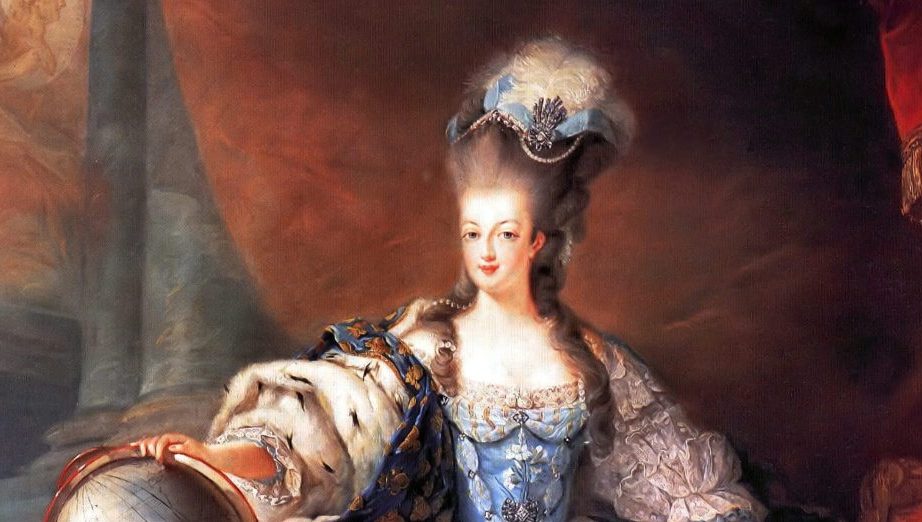
Unvarnished Truth of Let Them Eat Cake Marie Antoinette
The Making of a Royal Scapegoat
Interrogator: Your Majesty, let us begin without the usual courtly pleasantries. When you arrived at Versailles as a teenage bride from Austria, you entered a glittering world of absolute privilege. However, the French treasury was already bleeding dry from endless foreign conflicts. Yet, the public quickly came to identify you as the primary source of their compounding economic misery. Why did marie antoinette become the definitive lightning rod for a nation’s fury, rather than the systems of governance that predated her?
Marie Antoinette: Truly, you strike at the very core of my earthly tragedy. Consequently, one must understand that I was an outsider from the moment I set foot on French soil. Because of the historic rivalry between my native Austria and my adopted home, the court viewed me with permanent suspicion. Meanwhile, the complex financial realities of our kingdom were completely hidden behind the gilded walls of Versailles.
The state was practically bankrupt before my arrival due to systemic structural debts and our heavy investments in the American War of Independence. Nevertheless, the printing presses of Paris required a physical target for the boiling popular rage. Therefore, marie antoinette became the perfect villainous caricature for a desperate population. It was far easier for local pamphleteers to blame a foreign woman’s taste for diamonds than to dismantle centuries of absolute monarchy.
The Myth of the Callous Queen
Interrogator: Let us confront the single most damaging phrase attached to your historical legacy. As the story goes, upon being informed that your starving subjects had no bread, you allegedly muttered, “let them eat cake“. This quote is universally cited as absolute proof of your detached cruelty and aristocratic ignorance. Did you actually utter those words, or are you the victim of history’s most successful character assassination?
Marie Antoinette: I can state with absolute certainty that I never spoke those words, nor would I ever dream of doing so. In fact, the phrase “let them eat cake“—or more accurately, “Qu’ils mangent de la brioche”—was in print decades before I ever arrived in France. The philosopher Jean-Jacques Rousseau wrote of a generic “great princess” who said it when I was just a ten-year-old child playing in Vienna.
Ironically, my actual letters from that period express deep, genuine sympathy for the bread shortages plaguing our people. For instance, during the flour riots, I wrote to my family about the immense duty we held to work for their happiness despite our limited power. But propaganda does not care for the truth. The revolutionary press weaponized the false idea of “let them eat cake” because it perfectly encapsulated the narrative they wished to push. They needed the public to believe that the royal family viewed human suffering as a mere inconvenience to our daily luxuries.
+-----------------------------------------------------------------------+
|                    THE CHRONOLOGY OF A ROYAL MYTH                    |
+-----------------------------------------------------------------------+
| 1765: Rousseau writes 'Confessions' mentioning the "brioche" phrase.  |
| 1770: Marie Antoinette arrives in France to marry the future King.   |
| 1789: The French Revolution erupts; no contemporary links the quote.  |
| 1793: The execution of the Queen occurs without any mention of cake. |
| 1843: Writer Alphonse Karr explicitly blames her for the quote first. |
+-----------------------------------------------------------------------+
Power and Helplessness Behind Gilded Gates
Interrogator: You were nicknamed “Madame Deficit” by your enemies, yet you spent massive sums constructing a pastoral retreat, the Hameau de la Reine, where you dressed as a simple shepherdess. To the outside world, this looked like a mockery of peasant life. Were you trying to escape the realities of your position, or were you deliberately flaunting your privilege?
Marie Antoinette: My mock village was a desperate attempt to find a single shred of human normalcy. Naturally, the rigid, suffocating etiquette of the main court at Versailles felt like an emotional prison. Every single action, from waking up to giving birth, was treated as a highly regulated public performance. Therefore, I sought a private sanctuary where my closest friends and I could breathe without the constant scrutiny of calculating courtiers.
We wore simple white muslin dresses, which ironically became popular among the very women who eventually sought my downfall. Unfortunately, the public interpreted this retreat as a sign of complete indifference to their struggles. They believed I was playing a game of poverty while real people starved in the streets of Paris. In reality, I was merely a young woman trying to escape a system that used me as a decorative pawn.
The Trial and the Final Walk
Interrogator: Your downfall culminated in a highly theatrical trial before the Revolutionary Tribunal. You were accused not just of high treason, but of horrific, unnatural crimes against your own young son. During the proceedings, you famously appealed to all mothers in the courtroom. Was that a calculated political maneuver, or a genuine expression of parental heartbreak?
Marie Antoinette: It was the cry of an agonized mother whose soul had been completely shattered. While I could endure the false political charges of treason, the monstrous accusation of incest was a bridge too far. They had systematically systematically isolated my son, brainwashed him, and forced him to sign a confession he could not possibly comprehend.
When I refused to answer the charge during the trial, I did so because nature itself rejects such abominations. I turned to the crowded courtroom and appealed directly to the mothers present because I knew human maternal instinct transcends revolutionary politics. For a brief moment, a profound silence fell over the room as even my fiercest detractors felt the weight of that lie. Sadly, the political machinery of the revolution had already written my script, making the final verdict completely inevitable.
The Legacy of the Guillotine
Interrogator: On October 16, 1793, the world witnessed the historic event known as the marie antoinette execution. You were stripped of your royal garments, bound like a common criminal, and paraded through hostile crowds. Looking back at that final morning, did you feel a sense of betrayal by the country you tried to rule, or did you accept it as the ultimate price of the old regime’s failures?
Marie Antoinette: As I rode in the open cart toward the scaffold, I felt an overwhelming sense of profound calm. The terrifying spectacle of the marie antoinette execution was designed to completely humiliate the crown, yet I resolved to maintain my dignity until the very last breath. When I accidentally stepped on the foot of the executioner, Henri Sanson, my final words were a quiet apology to him.
"Monsieur, I ask your pardon. I did not do it on purpose."
— The documented final words of the Queen on the scaffold.
Ultimately, the brutal reality of the marie antoinette execution was not just about punishing me as an individual. It was a symbolic ritual meant to permanently sever France from its historical past. The public needed to witness the physical reality of the marie antoinette execution to convince themselves that the old world was truly dead. While the legend of “let them eat cake” continues to distort my true character, the dignity with which I faced death remains my final answer to history.
Marie Antoinette Execution
The Marie Antoinette execution remains most defining and dramatic moments, signaling the absolute end of the old regime. On October 16, 1793, the former queen of France was taken from the Conciergerie prison and paraded through the streets of Paris in an open cart. Unlike her husband, Louis XVI, who was transported in a closed carriage, the public nature of the Marie Antoinette execution was designed by the revolutionary tribunal to maximize public humiliation. Thousands of spectators lined the streets to witness the downfall of the woman they called “L’Autrichienne.”
When the procession finally reached the Place de la Révolution, the site of the Marie Antoinette execution, the fallen queen maintained her dignity despite the hostile crowd. Historically, it is recorded that her final words were an apology to her executioner, Henri Sanson, after she accidentally stepped on his foot. The guillotine fell at 12:15 p.m., completing the Marie Antoinette execution and forever cementing her tragic historical legacy as a symbol of the dangers of royal excess and political upheaval.
marie antoinette let them eat cake original French
Few historical quotes have retained as much cultural and political relevance as the one famously attributed to the last Queen of France before the revolution. However, looking into the history of marie antoinette let them eat cake original French origins reveals that she likely never uttered these words at all. The phrase actually stems from the French « Qu’ils mangent de la brioche », which translates more accurately to “Let them eat brioche”—a rich, egg-based bread rather than a traditional dessert cake. Historians note that this scandalous quote was widely popularized by anti-royalist propaganda to highlight the Crown’s severe disconnect from the starving peasants who were suffering from severe bread shortages and economic ruin.
When analyzing the marie antoinette let them eat cake original French context, the timeline simply does not align with the Queen’s life. The sentiment was first recorded by the philosopher Jean-Jacques Rousseau in his autobiographical work, Confessions, which he wrote around 1765. In his text, he recalls a “great princess” who gave this tone-deaf response upon hearing that the people had no bread. Because Marie Antoinette was only a nine-year-old child living in Austria at the time Rousseau penned this memory, it is impossible for her to have been the source. Still, revolutionary pamphlets weaponized the story, tying the marie antoinette let them eat cake original French phrase permanently to her legacy to fuel the public anger that ultimately led to the fall of the monarchy.
Today, the marie antoinette let them eat cake original French phrase serves as a global linguistic shorthand for systemic inequality, political arrogance, and elite indifference to economic crises. Understanding the shift from brioche to “cake” highlights how historical narratives can be shaped by translation and political framing. While the iconic queen may be innocent of this specific verbal slight, the enduring myth surrounding « Qu’ils mangent de la brioche » continues to captivate historians and language enthusiasts alike, remaining a staple of revolutionary folklore.
Did Marie Antoinette Say Let Them Eat Cake
The infamous phrase is last Queen of France, but did Marie Antoinette say “let them eat cake”? Historical evidence strongly suggests she never uttered these words. The line first appeared in Jean-Jacques Rousseau’s autobiographical work, Confessions, written around 1765 when Marie Antoinette was only nine years old and still living in Austria. Rousseau attributed the callous remark about starving peasants to a “great princess,” but given the timeline, it is structurally impossible for her to have been the source.
The myth linking the French queen to the quote gained massive traction years after her death, largely fueled by anti-royalist propaganda. Revolutionaries and political satirists eagerly weaponized the phrase to depict the monarchy as dangerously out of touch with the public’s suffering. When asking did Marie Antoinette say “let them eat cake”, historians point out that the original French phrase was actually “Qu’ils mangent de la brioche”. Brioche, a rich egg-and-butter bread, was expensive, which highlighted the supposed aristocratic ignorance of the bread shortages plaguing the working class.
Ultimately, the answer to did Marie Antoinette say “let them eat cake” is a definitive no. In fact, her actual correspondence reveals a woman deeply concerned with the plight of the poor, writing to her family about the duty of royalty to remain compassionate during times of famine. The enduring popularity of the quote is less about historical accuracy and more about its power as a cultural symbol of systemic inequality and class divide.
References
Campion-Vincent, V., & Shojaei Kawan, C. (2002). Marie-Antoinette et son célèbre dire : deux scénographies et deux siècles de désordres, trois niveaux de communication et trois modes accusatoires. Annales historiques de la Révolution française, (327), 29–56. https://doi.org/10.4000/ahrf.551
Waldinger, M. (2023). “Let Them Eat Cake”: Drought, Peasant Uprisings, and Demand for Institutional Change in the French Revolution. SSRN Electronic Journal. https://doi.org/10.2139/ssrn.4380964
Recommended Reading & Resources
-
The Palace of Versailles Official Archives
This official site offers an immersive look into the daily life, architecture, and private apartments where the queen lived before the revolution.
-
The French Revolution Collection at the British Library
An invaluable academic resource containing original pamphlets, political pornography, and legal documents from the 1793 trials.
-
The History Hit Biography Project
Provides comprehensive modern historical breakdowns, expert podcasts, and peer-reviewed essays detailing the financial realities of the Ancien Régime.
Disclaimer: The text above represents an imaginative historical reconstruction. This interview reflects what questioninghistory.com believes the person interviewed may have answered if they were alive today to respond to modern historical consensus.