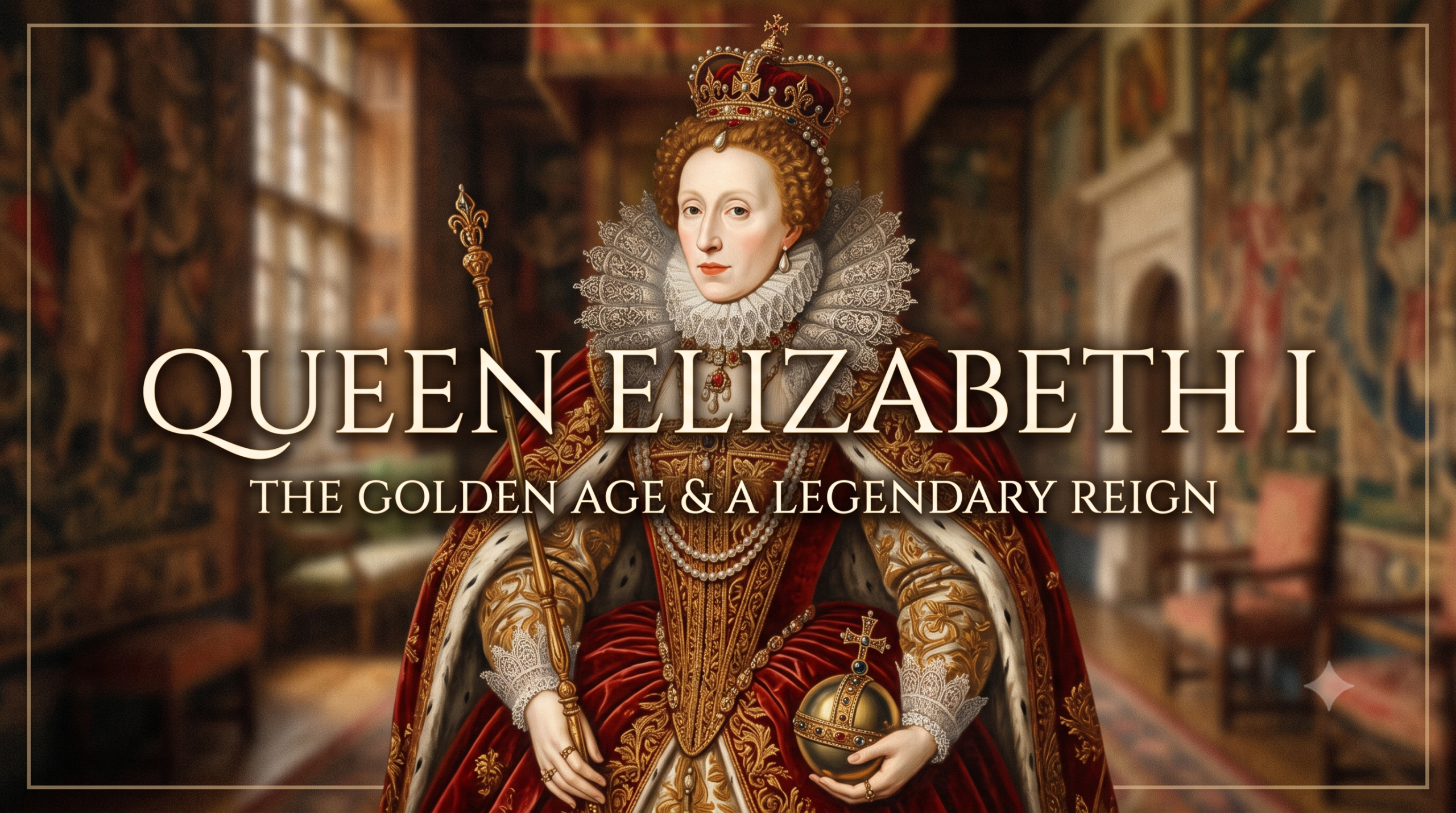
Queen Elizabeth I Faces the Interrogator: A Fictional Sit-Down With England’s Virgin Queen
She never married, yet she outlasted nearly every rival who tried to unseat her. In this fictional interview, the Interrogator presses Queen Elizabeth I on the questions people still argue about today, including why was Queen Elizabeth I called the Virgin Queen and what she truly thought about the men who plotted against her. Buckle in she does not dodge a single one.
On Power, Marriage, and the Virgin Queen Myth
Interrogator: Let’s start with the question everyone asks first. Why was Queen Elizabeth I called the Virgin Queen, and was that title ever really about her personal life?
Queen Elizabeth I: People love a simple story, and “virgin” is a simple word. However, the truth is messier. I built that image myself, on purpose, because a queen without a husband needed a myth to fill the gap where a king would have stood. Marriage meant handing power to a man, and I watched what happened to women who did that. My mother lost her head. My sister lost the throne’s respect chasing a Spanish match. So I turned my unmarried state into a kind of religion — England was my husband, my people were my children. It worked. Nobody dared push too hard once I’d wrapped myself in that language.
Interrogator: Some historians say it was pure political theater. Others think there’s real feeling behind it. Which is it?
Queen Elizabeth I: Both, honestly. A queen cannot afford to be only one thing. I felt real affection for Robert Dudley — everyone at court knew it — yet I also understood that marrying him, or anyone, would have cost me the one thing I actually controlled, which was my own authority. Meanwhile my council pestered me for decades about producing an heir. I gave them nothing but promises and delay, because delay was a weapon too.
Interrogator: So let’s settle it plainly. Did Queen Elizabeth I have children?
Queen Elizabeth I: No. I had no children of my own blood, whatever the rumors said about Dudley or Seymour or any other man they wanted to attach to my name. I chose not to marry, and without marriage there was no legitimate heir to raise. That single fact shaped the entire second half of my reign — it’s why the succession question haunted every year I sat on that throne, and why the answer to did Queen Elizabeth I have children mattered so much to men who wanted certainty about what came after me.
Rivals, Enemies, and the Execution of Mary Queen of Scots
Interrogator: Mary, Queen of Scots. Your own cousin. You kept her locked away for nearly two decades, then signed her death warrant. Defend that.
Queen Elizabeth I: I did not sign it lightly, and I’ll say now what I said then — I regretted the timing, if not the necessity. Mary was a magnet for every plot against my life. As long as she breathed, ambitious men had a Catholic queen to rally behind. Walsingham brought me the evidence from the Babington plot, and it was not thin evidence. She had agreed, in writing, to my assassination. What monarch lets that stand?
Interrogator: You blamed your secretary afterward, claimed he sent the warrant without your final word. Was that honest, or convenient?
Queen Elizabeth I: It was convenient, and I won’t pretend otherwise now. I needed distance from that act in the eyes of Europe’s other courts. A queen who executes another queen invites uncomfortable questions about the whole idea of royal sanctity. Still, the decision was mine in every way that mattered. William Davison paid for my discomfort, and that was unfair to him. I knew it at the time.
Interrogator: Do you think history judges you fairly on that?
Queen Elizabeth I: History rarely judges anyone fairly. It flattens a hard choice into a single sentence. I lived with plots against my life for thirty years — poison, daggers, foreign armies waiting for the signal. Mary was not an innocent bystander in any of that. As a result, I make no apology for choosing my own survival, and my kingdom’s, over hers.
War, the Armada, and Her View on Conflict
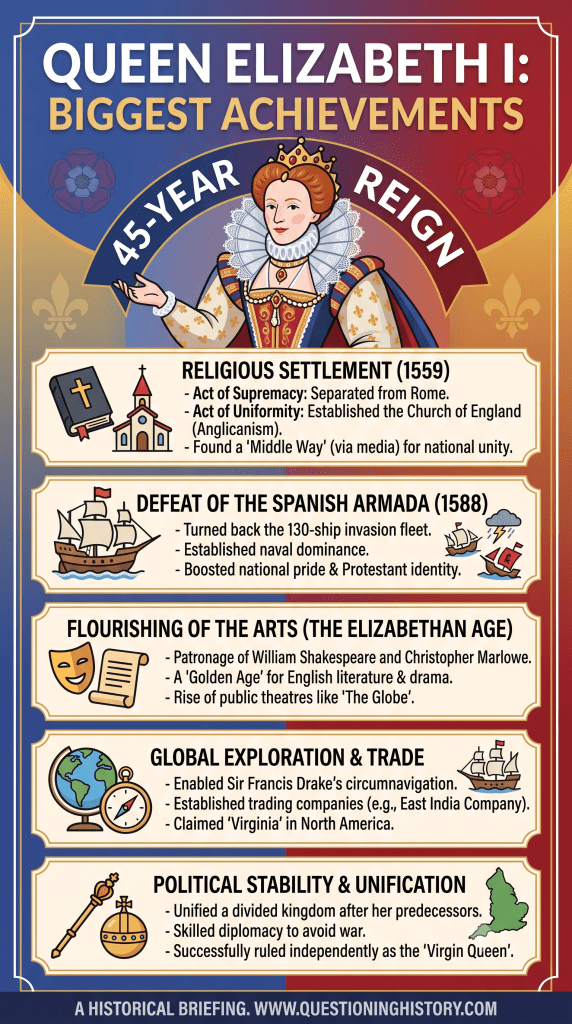
Interrogator: The Spanish Armada in 1588. Philip of Spain sent a fleet meant to end your reign entirely. What went through your mind?
Queen Elizabeth I: Fear, at first, like any sensible person facing an invasion. But fear is not useful once the enemy’s ships are visible from your coast. I went to Tilbury and stood among the soldiers, not behind them. I told them I had the body of a weak woman but the heart and stomach of a king, and I meant every word. My presence there mattered more than any speech could on its own — soldiers fight harder for someone who shows up.
Interrogator: Critics say you were reluctant to spend money on war, that you starved your commanders of resources even during the fight against Spain. True?
Queen Elizabeth I: Largely true, and I’d do it again. War is expensive, and an empty treasury kills a kingdom just as surely as an enemy sword does. Drake and Howard complained constantly about short supplies, and I understand their frustration. Still, I balanced their urgency against a longer view — a bankrupt England would have been easy prey for the next threat, and there is always a next threat.
Interrogator: Did you enjoy war? Some monarchs did.
Queen Elizabeth I: No, never. My father chased glory in France and burned through fortunes doing it. I watched that waste as a girl and swore I’d rule differently. War, to me, was a last resort and a costly one, not a stage for personal glory. I preferred a treaty to a battlefield whenever one could be reasonably had.
Temperament, Regrets, and Controversial Calls
Interrogator: You had a famous temper. Courtiers feared your rages. Was that calculated, or did you simply lose control at times?
Queen Elizabeth I: A little of both, if I’m honest with you. Fear is a useful tool for a ruler with no army of her own loyal only to her. A well-timed outburst kept ambitious men guessing and careful. That said, I am not going to claim I was serene underneath it. Decades of pressure, betrayal, and lonely decisions will sharpen anyone’s edges.
Interrogator: The Earl of Essex — your favorite, then your prisoner, then a man you executed for treason. What happened there?
Queen Elizabeth I: Essex mistook affection for immunity. I indulged him longer than I indulged almost anyone, and he repaid that indulgence with an armed rebellion in the streets of my own capital. That is not something a monarch can forgive, however fond she once was. It grieved me deeply — more than most people ever knew — but grief does not excuse treason, and I would not pretend otherwise to soften my legacy.
Interrogator: Any decision you’d genuinely take back?
Queen Elizabeth I: Mary’s execution, in its handling if not its substance. And perhaps I’d have named a clearer successor earlier, rather than letting that question fester and breed anxiety across the kingdom for years. Indecision has costs too, even when it feels like caution in the moment.
Legacy, Death, and the Question of Succession
Interrogator: Let’s talk numbers. How long did Queen Elizabeth I reign, and looking back, did it feel that long while you were living it?
Queen Elizabeth I: Forty-five years, from 1558 until my death in 1603. Some stretches passed quickly, especially the early years when everything felt urgent and new. Other years dragged under the weight of plots, illness, and grief for people I’d loved and lost. When you ask how long did Queen Elizabeth I reign in simple terms, forty-five years sounds tidy on paper. Lived day by day, it felt like several lifetimes stitched together.
Interrogator: You died without naming an heir clearly to the public, though James of Scotland took the throne. Why stay silent so long?
Queen Elizabeth I: Naming a successor too early creates a rival court, a second center of loyalty competing with the first. I’d watched that dynamic destroy other monarchs. So I held my tongue on it publicly for as long as I safely could, even as my council pressed me constantly. In the end James was the sensible choice, and most people at court already knew it.
Interrogator: How do you want to be remembered — as the Virgin Queen, or something else entirely?
Queen Elizabeth I: Not as a symbol, if I have any say in it, though I suspect symbols outlive the people they’re built from. I’d rather be remembered as someone who kept a fractured, threatened little kingdom intact for forty-five years without losing it to Spain, to rebellion, or to her own council’s doubts. The Virgin Queen title served its purpose in my lifetime. Whether it defines me forever is not really mine to decide anymore.
Interrogator: Last question. Any regrets about never having a family of your own?
Queen Elizabeth I: England was my family, strange as that sounds to modern ears. I made peace with that choice long before I died, even on the hardest nights. People still wonder, generations later, did Queen Elizabeth I have children she kept hidden, or secretly wish she had. I understand the curiosity. But no — I chose the crown over a cradle, with open eyes, and I’d make that same choice again.
Closing Thoughts
This conversation, of course, never happened. Yet piecing together Elizabeth’s own letters, speeches, and the accounts of those who knew her, a picture emerges of a ruler who was sharper, warier, and more self-aware than the simplified “Virgin Queen” legend suggests. She built a myth to survive in a world built against women holding power alone, and she outlasted nearly everyone who bet against her.
Read next: more fictional interviews from the interrogation room with Henry VIII, Cleopatra and Marie Antoinette.
Further Reading
- The National Archives — Elizabeth I — Holds original state papers, letters, and government records from Elizabeth’s reign, useful for verifying the political events referenced above.
- Historic Royal Palaces — Manages several sites tied to Elizabeth’s life, including Hampton Court, and publishes well-researched articles on Tudor court life.
- Encyclopaedia Britannica — Elizabeth I — A reliable, academically reviewed overview of her biography, reign, and historical significance for readers wanting a factual baseline.
This interview is a fictional reconstruction. It reflects what questioninghistory.com believes Queen Elizabeth I might plausibly have said if they were alive today, based on historical research. It is not a real or verified interview.