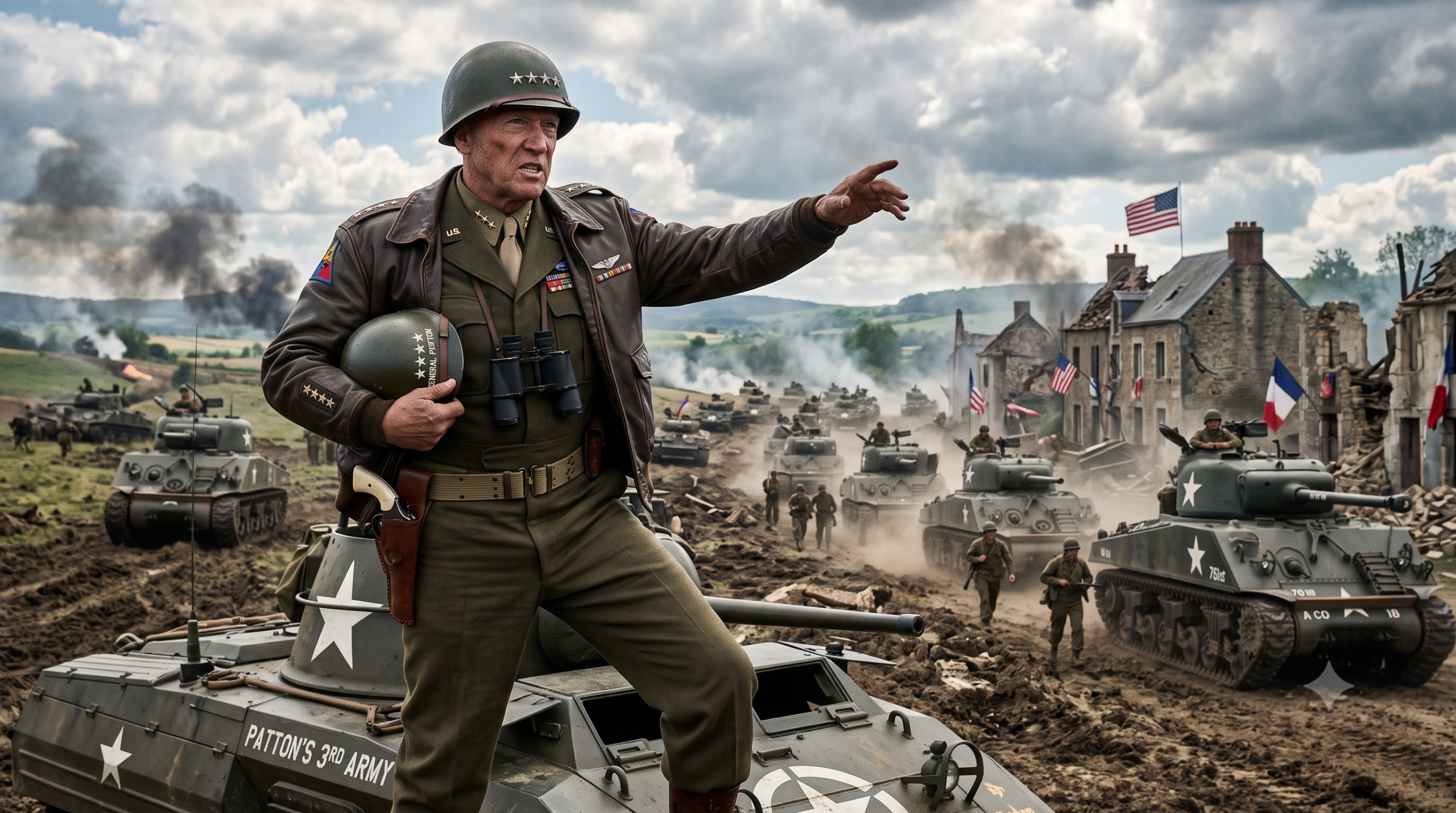
George Patton: An Imagined Sit-Down With America’s Most Provocative General
George Patton never dodged a fight, on the battlefield or off it. In this imagined conversation, we push him on the decisions that made him famous and the ones that nearly ended his career. Buckle up, because this general does not do soft answers.
The Making of a Warrior
Interrogator: You grew up around money and privilege. So why did a comfortable kid choose a life of mud, blood, and orders barked at dawn?
General Patton: Comfort bores me. My family fought in wars going back generations, and I felt that pull before I could walk straight. Reading came hard for me as a boy, harder than most people know. However, I refused to let a slow start define a fast finish. I studied cavalry tactics until the words finally made sense, and once they did, nothing stopped me.
Interrogator: Historians call you theatrical, obsessed with image, almost an actor playing a soldier. Is that fair?
General Patton: Fair enough, and I would not apologize for it either way. A soldier needs a leader who looks like victory itself, not a tired clerk. Therefore I wore the polished boots, the ivory-handled revolvers, the whole show. Men fight harder for someone who believes his own legend, and I made sure mine looked unbeatable from a mile away.
The Slapping Incidents and the Price of Temper
Interrogator: Let’s address the slapping incidents directly. You struck hospitalized soldiers you accused of cowardice. Many still call that unforgivable.
General Patton: I regret losing my temper that badly, and I said so at the time. Battle fatigue was a real wound, though I did not understand it the way doctors do now. In contrast, I saw only a man without a mark on him, sitting among the wounded, and something in me snapped. That is the truth, ugly as it sounds, and I will not dress it up further.
Interrogator: Those incidents nearly cost you your command. Did the punishment fit what you did?
General Patton: Eisenhower buried me for months, and frankly, I deserved a hard lesson. Still, I never understood why newspapers turned two slaps into a national scandal while ignoring the men dying every day in Sicily. As a result, I spent that stretch stewing in Sicily with no army to lead, watching other generals take the glory I felt was mine. It taught me to keep my hands, and my temper, where they belonged.
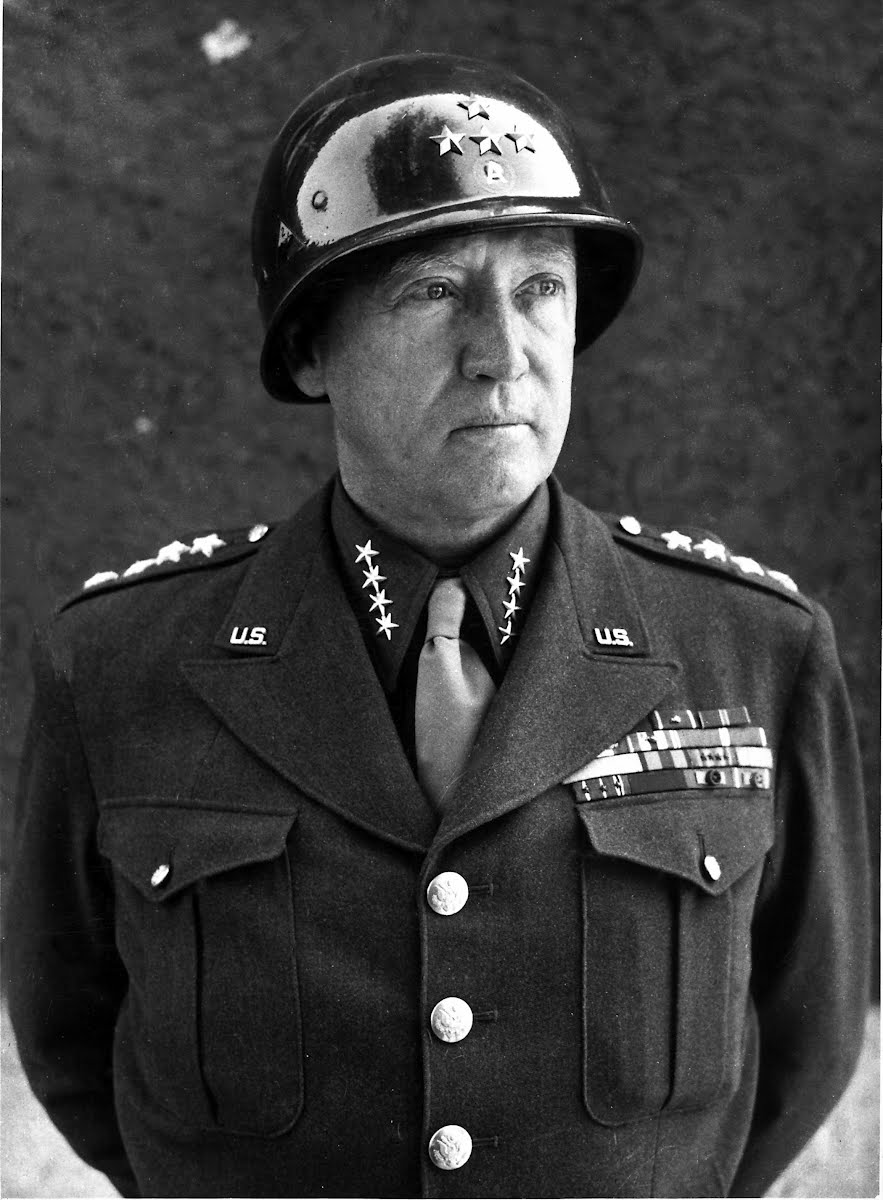
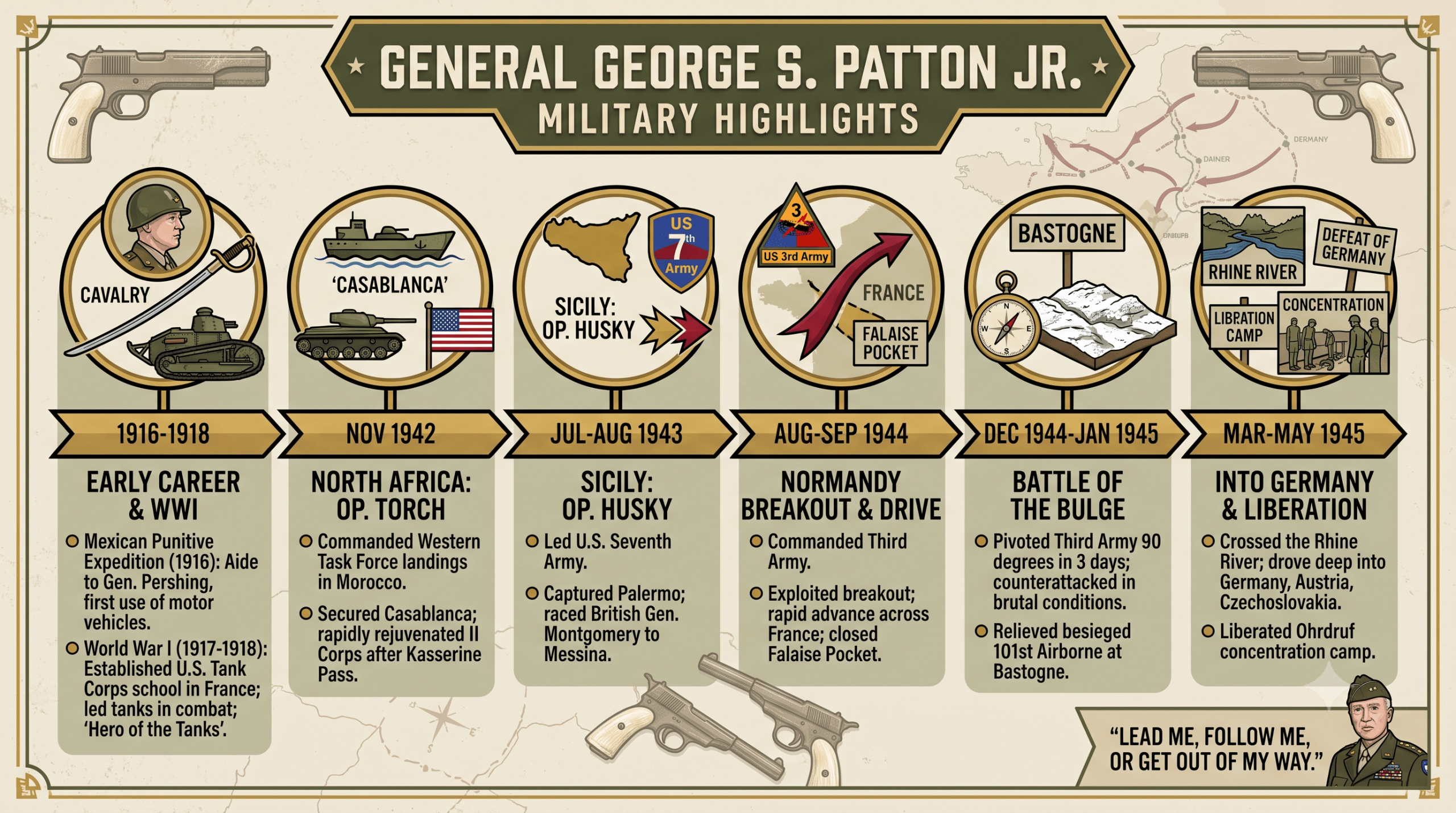
Patton’s Third Army and the Race Across Europe
Interrogator: Patton’s Third Army covered more ground faster than almost any force in the war. What was the secret?
George Patton: Speed wins wars, plain and simple. Meanwhile, other commanders wanted to plan every mile in advance, and I wanted my tanks moving before the enemy finished breakfast. My Third Army chewed through France because we struck fast and refused to stop for anything short of an order from above. A general who hesitates hands the enemy a gift he cannot afford to give.
Interrogator: You once said gasoline shortages hurt you more than German bullets during that push. What did you mean?
General Patton: Exactly what I said. My Third Army could have reached the German border weeks earlier if the fuel trucks had kept pace with my tanks. Instead, the high command diverted supplies to other fronts, and my advance stalled for reasons that had nothing to do with enemy resistance. Nothing frustrated me more than watching a winning army sit idle over a fuel gauge.
Rivals, Rank, and Reputation
Interrogator: Montgomery gets a lot of ink for rivalling you. What actually went on between you two?
General Patton: Montgomery wanted the spotlight, and so did I, so naturally we collided. He moved with caution bordering on paralysis, while I moved like the enemy owed me money. Our commanders often had to referee our arguments, like schoolboys fighting over a ball. Still, I respected his mind, even when his pace nearly drove me mad.
Interrogator: Some say Eisenhower tolerated you only because you delivered results. Do you think that assessment is accurate?
General Patton: Ike needed a general willing to take risks nobody else would touch, and that was me. Our friendship went back decades, yet he benched me more than once when politics demanded it. Therefore I understood the deal: deliver victories, accept the leash, and never expect a public thank-you. That arrangement worked because we both knew the war mattered more than our pride.
War, Death, and the Legend on Screen
Interrogator: You once said you wanted to die from the last bullet of the last battle. Instead, a car crash killed you months after the war ended. Does that irony bother you?
George Patton: Bother me is too small a word. I spent my whole life chasing a warrior’s death, and fate handed me a quiet hospital bed instead. A soldier prepares for the battlefield, not for boredom, and boredom is what killed me in the end. There is no glory in dying slowly while the guns have already gone silent elsewhere.
Interrogator: The general Patton movie from 1970 shaped how the public sees you more than any history book ever did. How do you feel about that legacy?
General Patton: George C. Scott captured my temper better than most historians manage on paper. That general Patton movie opens with a speech people still quote decades later, and I will admit the words ring true to who I was. Actors and historians rarely agree on anything, yet somehow that film split the difference well. My legacy now lives inside a movie screen as much as inside any archive, and I have made peace with that strange fact.
Closing Thoughts From the Front Lines
George Patton remains one of history’s most argued-over commanders, admired for his boldness and criticized for his cruelty in equal measure. His Third Army carved a path across Europe that still gets studied in military academies today. Whether you see him as a hero, a bully, or both at once, his story refuses to fade quietly into the archives.
Further Research Links
- National WWII Museum: George S. Patton — This resource offers a detailed, historically accurate overview of Patton’s military career, sourced from a respected institution dedicated to WWII history.
- U.S. Army Center of Military History — The official Army archive provides primary documents, unit records, and biographical detail that go far beyond simplified pop culture portrayals.
- Eisenhower Presidential Library — Since Eisenhower and Patton worked closely together, this archive offers valuable context on their relationship, including correspondence and records from the slapping incident controversy.
Disclaimer: This interview is a work of historical imagination. questioninghistory.com believes this reflects how George S. Patton may have answered these questions if he were alive today, based on documented history, quotes, and biographical research. It is not an actual interview.