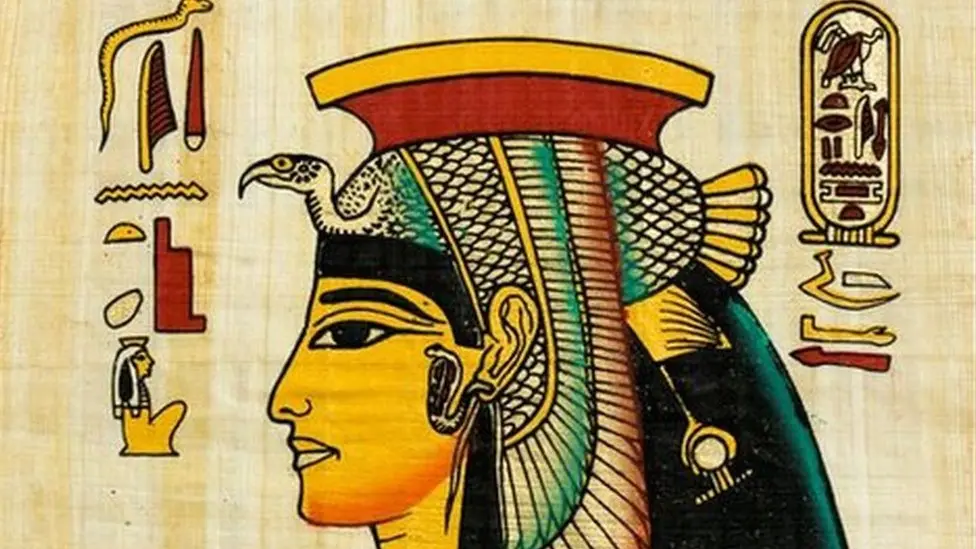
The Hard Talk: Cross-Examining the Myth of Egypt’s Last Queen
Historically, few monarchs have been as romanticized, weaponized, or misunderstood as the final Pharaoh of the Nile. Was Cleopatra actually Greek or Egyptian? To tear away the Roman propaganda and Hollywood glamor, we have traveled back in time for an exclusive, uncompromising interview.
Sitting across from me is a ruler who fought the greatest empire on earth with brilliant diplomacy, immense wealth, and sharp intellect. In the uncompromising style of a modern political grilling, I hold her accountable to the history books.
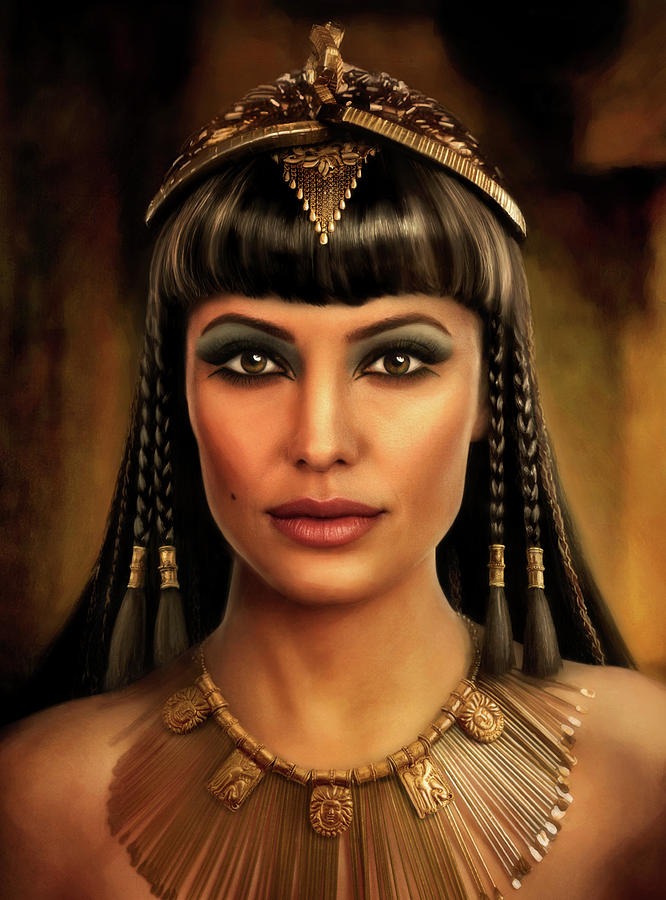
Unmasking the True Identity of the Nile’s Final Queen
Interrogator: Your Majesty, let us begin by stripping away the centuries of romantic folklore. Roman historians painted you as a manipulative seductress who simply used powerful men like Julius Caesar and Mark Antony to maintain your grip on power. However, modern revisionists claim you were a brilliant intellectual strategist. Which is it? Were you a calculating political operator, or did you simply use your legendary charms to secure your crown?
Cleopatra VII: To survive in a world surrounded by Roman wolves, a ruler must deploy every single weapon at her disposal. Rome chose to frame my alliances as mere seduction because their pride could not accept that a woman outmaneuvered their finest generals. Consequently, my relationships with Caesar and Antony were deeply calculated political partnerships designed to preserve Egyptian sovereignty. I brought the unimaginable wealth of the Ptolemaic Empire to the table, while they brought the necessary military might.
Interrogator: Let us look closer at that bloodline of yours, because it is wrapped in controversy. Your dynasty ruled Egypt for nearly three centuries, yet your family famously refused to integrate fully with the local population. Consequently, the world still debates your true heritage today.
Was Cleopatra actually Greek or Egyptian?
Cleopatra VII: Racially and genealogically, my ancestry traces directly back to Macedonia through Ptolemy I, one of Alexander the Great’s most trusted generals. Therefore, if you are looking at pure genetics, the answer to whether was Cleopatra actually Greek or Egyptian leans heavily toward my Greek heritage. Nevertheless, spiritually, culturally, and politically, I was entirely Egyptian. Unlike my ancestors, who ruled as foreign occupiers, I actively embraced the ancient customs, wore the traditional robes, and was crowned as a living goddess of the Nile. Therefore, the question of whether was Cleopatra actually Greek or Egyptian cannot be answered solely by a family tree, as my heart belonged entirely to Egypt.
Debunking the Myths of Royal Intellect and Ancient Linguistics
Interrogator: You speak of embracing the local culture, which brings us nicely to your famous intellect. Ancient biographers like Plutarch raved about your staggering capacity for learning. Specifically, he claimed you rarely required an interpreter when dealing with foreign dignitaries. Tell me plainly, without any royal exaggeration: Did Cleopatra really speak nine languages?
Cleopatra VII: In the halls of Alexandrian diplomacy, relying on an interpreter is a massive political liability. Because I understood this vulnerability, I mastered the tongues of the neighboring nations, including the Hebrews, Arabs, Syrians, and Medes. So, did Cleopatra really speak nine languages? Yes, I absolutely did, and I was incredibly proud of that achievement. Furthermore, I was the very first monarch of my entire Greek dynasty who actually took the time to learn the native Egyptian language. For that reason, when people ask did Cleopatra really speak nine languages, they must understand it wasn’t a parlor trick; it was a vital tool of geopolitical survival.
Interrogator: Your linguistic talents are certainly impressive, but critics argue that your education was merely a vanity project funded by the staggering wealth of Alexandria. Skeptics today still look at the legends and ask: Did Cleopatra really speak nine languages? Or was this just clever propaganda designed to intimidate foreign ambassadors?
Cleopatra VII: Anyone who doubts my education clearly fails to understand the sheer complexity of governing a Mediterranean superpower. I studied rhetoric, philosophy, and mathematics at the famous Museum of Alexandria, which was the intellectual capital of the ancient world. When I negotiated trade deals or military treaties, I did so directly with kings and generals in their native dialects. Thus, when history asks did Cleopatra really speak nine languages, the proof lies in my ability to manage complex international relations without a single Roman advisor holding my hand.
The Dark Secrets and Sacrifices of Ptolemaic Power
Interrogator: Let us turn to the brutal reality of how you actually secured your throne. Your path to absolute power was paved with the bodies of your own family members. You fought a civil war against your brother-husband, Ptolemy XIII, which resulted in his drowning. Later, your younger brother, Ptolemy XIV, died under highly suspicious circumstances, and you openly ordered the execution of your sister, Arsinoe. How do you defend such ruthless fratricide?
Cleopatra VII: You judge ancient rulers through a modern lens of soft morality, which is a luxury you can afford. In the Ptolemaic dynasty, the path to the throne was always a lethal game of elimination. Had I shown mercy to my siblings, they would have quickly allied with Rome to execute me instead. Therefore, eliminating competing claims to the throne was not a matter of malicious cruelty; it was a strict political necessity to ensure stable governance. I chose the survival of Egypt over the lives of traitorous siblings who wished to see our kingdom carved up by foreign empires.
Interrogator: Your ruthlessness ensured your survival, but your choices ultimately brought Rome directly into your nursery. You gave Julius Caesar a son, Caesarion, whom you boldly declared to be the rightful heir to both East and West. However, your ambition painted a massive target on that young boy’s back. Tell us, because the historical record becomes incredibly dark following your defeat: What happened to Cleopatra’s son Caesarion?
Cleopatra VII: My beautiful boy, born Ptolemy XV Caesar, was the ultimate embodiment of my grand geopolitical vision. He combined the divine royal lineage of Egypt with the immense political legacy of Julius Caesar. Unfortunately, that very same magnificent lineage made him an existential threat to Octavian, Caesar’s adopted son. When Octavian invaded Alexandria after our defeat at Actium, I desperately tried to save my boy by sending him south toward Ethiopia and the ports of the Red Sea. Tragically, his own tutor betrayed him for Roman gold, and Octavian ordered his execution because “too many Caesars is not a good thing.” Knowing what happened to Cleopatra’s son Caesarion remains the deepest heartbreak of my entire life.
The Tragedy of the Lost Heir and the Collapse of an Empire
Interrogator: It is a tragic end, but your critics would argue that you used your own child as a political pawn. By crowning him co-ruler, you sealed his fate. If you had kept him out of the political spotlight, he might have lived a long, quiet life. When we look back at history and ask what happened to Cleopatra’s son Caesarion?, are you not the one primarily responsible for his execution?
Cleopatra VII: That argument is utterly naive, Interrogator. Octavian was completely ruthless and would never have allowed a biological son of Julius Caesar to live, regardless of whether he wore a crown or lived as a beggar. My son was born a Pharaoh, and he died like a Pharaoh. When studying what happened to Cleopatra’s son Caesarion?, history must blame the cold-blooded calculation of Rome, not a mother’s desperate attempt to secure her son’s birthright. We fought for an empire, and when we lost, the Roman victors naturally eliminated the true heir to ensure their own unchallenged dominance.
Interrogator: Let us revisit your lineage once more, because your defenders often use your local popularity to distract from your military failures. Even though you positioned yourself as the traditional protector of Egypt, your defeat fundamentally transformed your country into a mere breadbasket for the Roman Empire. Consequently, we must ask again: Was Cleopatra actually Greek or Egyptian? If you were truly Egyptian, why did your reign end with the total loss of your country’s independent identity?
Cleopatra VII: Egypt did not fall because of my heritage, nor did it fall due to a lack of devotion on my part. We fell because Rome possessed an unstoppable, industrial military machine that no single nation could withstand forever. Whether history decides that was Cleopatra actually Greek or Egyptian, nobody can deny that I delayed the Roman conquest of my homeland for more than two decades. I utilized my Greek tactical intellect and my Egyptian wealth to build a magnificent navy, fighting until the absolute end. My suicide was the ultimate proof of my devotion, as I chose to die by the sacred asp rather than be paraded through the streets of Rome in chains.
The Enduring Legacy of History’s Most Documented Monarch
Interrogator: Your dramatic death certainly secured your immortality, but it also cemented a massive amount of historical confusion. Even today, scholars argue fiercely over your true nature, your education, and your children. To wrap this up cleanly for our audience, let us summarize the core mysteries that still define your legendary biography. Was Cleopatra actually Greek or Egyptian? Furthermore, did Cleopatra really speak nine languages? And finally, what happened to Cleopatra’s son Caesarion?
Cleopatra VII: My legacy cannot be reduced to simple, black-and-white questions. I was a Macedonian Greek by blood who became more fiercely Egyptian than any native ruler before me. I spoke nine languages fluently to defend my kingdom’s interests on the international stage without needing to rely on untrustworthy translators. Finally, my eldest son, Caesarion, was murdered by a paranoid Roman dictator who feared the boy’s rightful claim to power. I am not a myth, nor am I a tragic romance character; I am a pharaoh who ruled with absolute authority, and my story will echo through eternity.
Interrogator: Your Majesty, thank you for your time and your uncompromising candor.
Resources for Further Research
This comprehensive digital archive provides deeply detailed historical contexts regarding the political environment of Ptolemaic Egypt and offers excellent insights into the queen’s genuine strategic intellect.
An exceptional collection of physical artifacts, coins, and official decrees from the era that clearly help illustrate the complex blending of Greek and Egyptian cultures during her reign.
This academic portal features thoroughly researched papers detailing the exact military campaigns of the late Republic and chronicles the tragic political executions of the Ptolemaic heirs.
Disclaimer: The interview presented above is a creative, historical simulation. It represents what the editorial team at questioninghistory.com believes Cleopatra VII may have answered if she were alive today, based on surviving ancient texts, archeological evidence, and contemporary historical consensus.