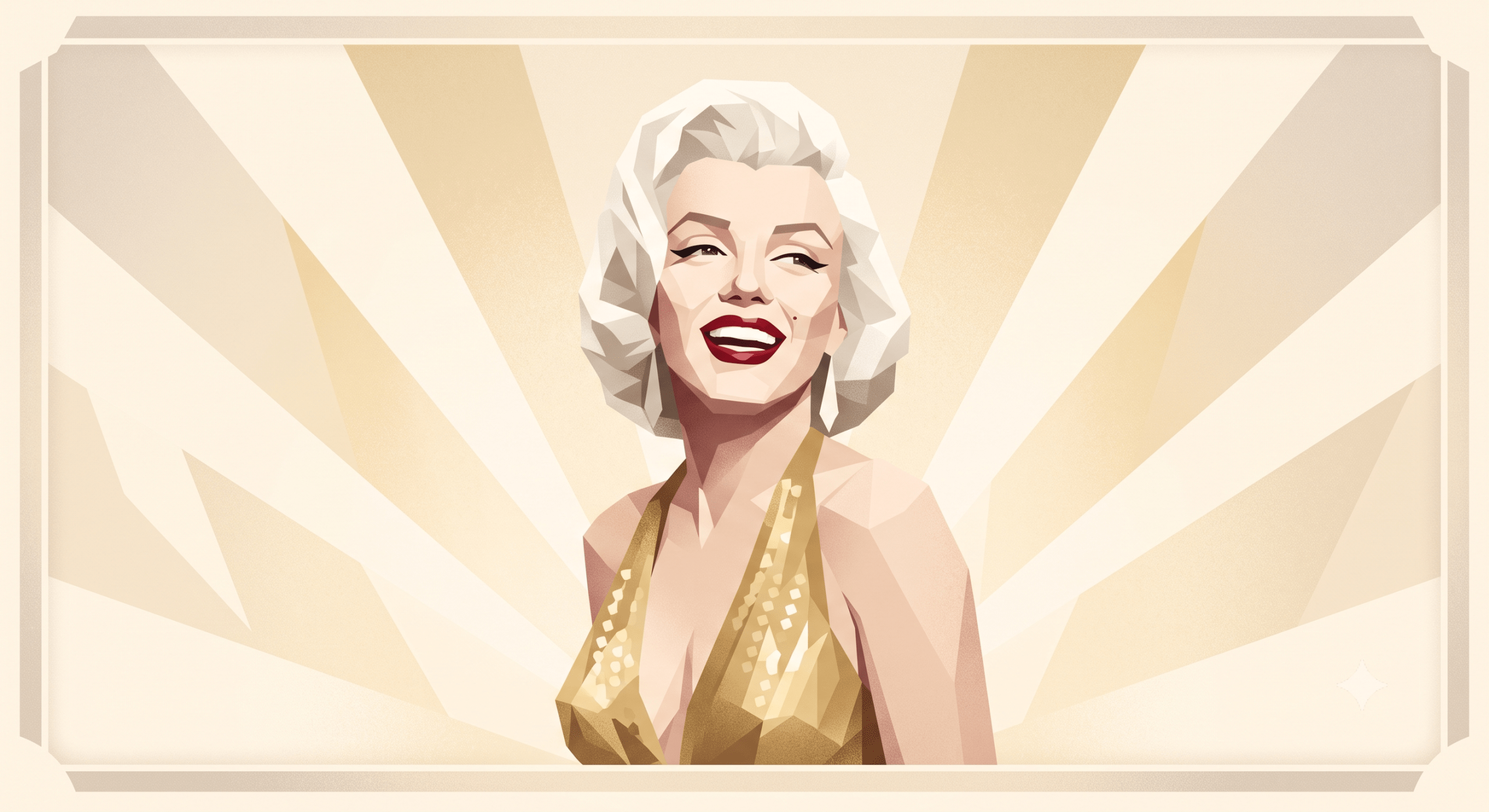
Marilyn Monroe remains one of Hollywood’s most photographed and least understood stars. In this fictional interview, questioninghistory.com imagines what she might say today about the girl she used to be, the death that still sparks debate, and the quotes that made her immortal.
Norma Jeane Before Marilyn
Interrogator: Let’s start with the name on your birth certificate. Who was Norma Jeane before she became Marilyn Monroe?
Marilyn Monroe: Norma Jeane Mortenson was a kid nobody planned for. My mother worked as a film cutter, and she was too unwell most of the time to raise me herself. I bounced between foster homes and an orphanage, and I don’t think anyone in those houses imagined I’d end up on a movie screen. The studio later baptized me as Norma Jeane Baker, using my mother’s first husband’s name, though he wasn’t my father either. Nobody could ever quite pin down whose daughter I was.
Interrogator: So how did “Marilyn Monroe” come about?
Marilyn Monroe: Twentieth Century-Fox handed me that name in 1946, right after I signed my first contract. Monroe was my mother’s maiden name, at least, so I kept a small thread back to her. Marilyn, though, was pure invention — a studio executive’s idea of what a star should sound like. I didn’t legally change it until 1956. Honestly, some days it still felt like I was wearing somebody else’s coat.
Breaking Free of the Blonde Bombshell Image
Interrogator: People still call you the dumb blonde, even decades later. Where did that reputation come from, and did it bother you?
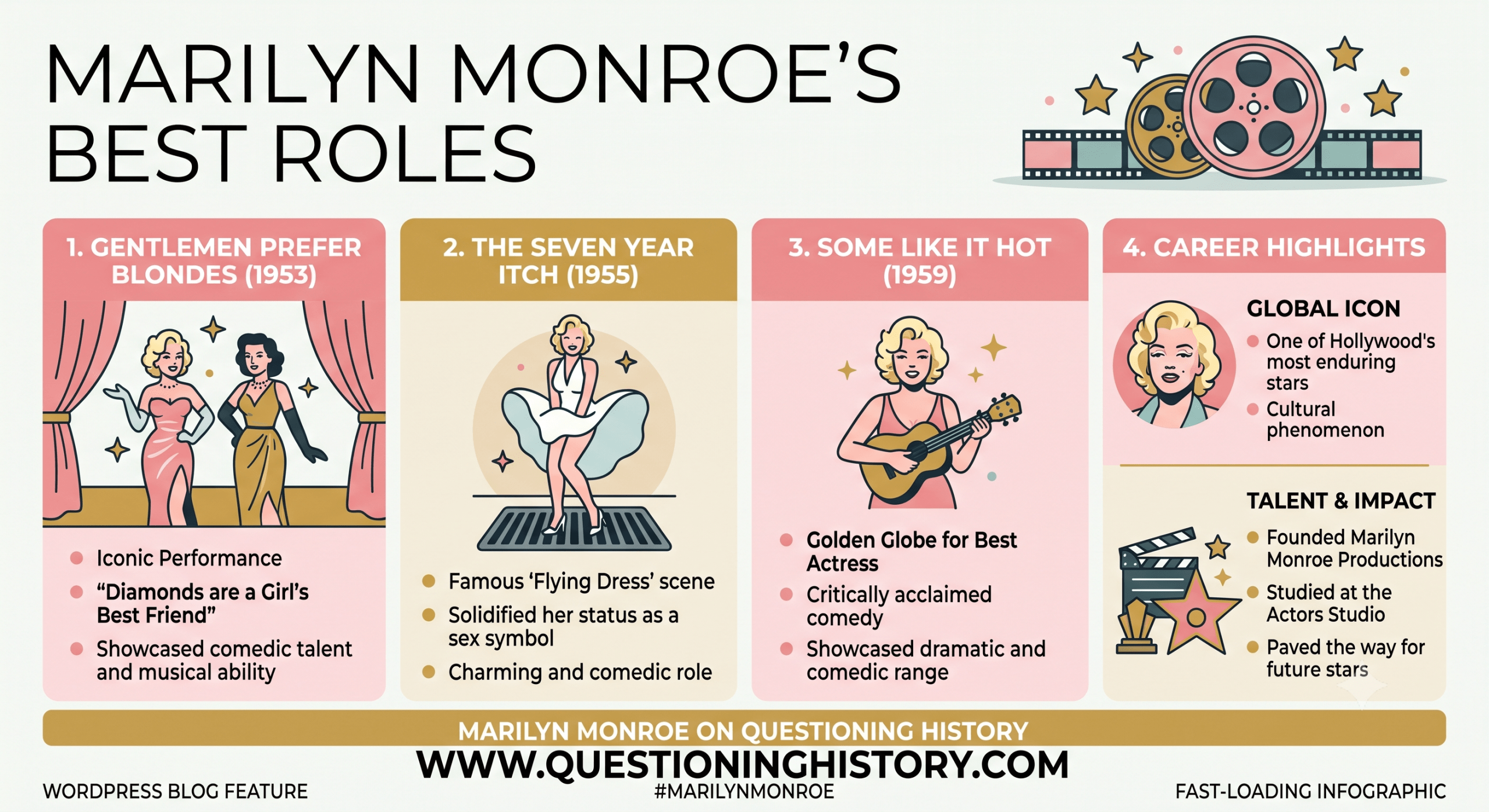
Marilyn Monroe: It bothered me plenty. I played that character on screen because the studio wanted box office, and I was good at it. However, nobody ever asked what I read in my downtime or how many hours I spent studying with acting coaches like Lee Strasberg. I wasn’t dumb. I was strategic. Playing dumb sold tickets, and I understood exactly what I was doing while I did it.
Interrogator: There’s constant speculation about plastic surgery shaping your look. What’s the truth?
Marilyn Monroe: I had a small procedure on my chin and possibly my nose early on, nothing dramatic. The rest was makeup, lighting, and a studio system built to manufacture perfection. People assume a face like mine had to be surgically constructed because they can’t accept that some of it was just genetics and stubborn hard work in front of a mirror.
Rivals, Romances, and the Studio Machine
Interrogator: Jayne Mansfield often gets compared to you as a rival blonde bombshell. Was there real tension between you two?
Marilyn Monroe: Less tension than the columnists wanted. Jayne borrowed plenty from my image, and the press loved pitting us against each other because conflict sells magazines. We weren’t friends, but we weren’t enemies either. Mostly, I felt sorry that Hollywood only seemed to have room for one blonde at a time.
Interrogator: Your marriages and affairs were tabloid fodder for years. Did you ever get a private life at all?
Marilyn Monroe: Barely. I married James Dougherty, then Joe DiMaggio, then Arthur Miller, and each one ended with cameras waiting outside the courthouse. Whatever happened beyond those three marriages, the public turned into folklore whether it was true or not. Fame doesn’t leave much room for anything that stays yours alone.
The Final Night in Brentwood
Interrogator: Let’s talk about August 4, 1962. What do you think people still get wrong about that night?
Marilyn Monroe: They treat it like a mystery novel instead of a tragedy. I was struggling — depression, sleeplessness, a dependence on barbiturates my own doctors kept prescribing. My housekeeper, Eunice Murray, noticed my light on around midnight and couldn’t get an answer. My psychiatrist broke a window to reach me. By then it was already over.
Interrogator: The coroner ruled it a probable suicide by barbiturate overdose. Do you think that ruling was accurate?
Marilyn Monroe: Likely, yes, even if the scene left plenty of loose threads. Investigators found an empty Nembutal bottle by the bed, yet no pill residue turned up in my stomach, which struck later researchers as odd for an oral overdose. My body wasn’t twisted the way most overdose victims end up. Small details like that are exactly why people keep pulling at the thread decades later.
Interrogator: Some investigators have pointed to the crime scene itself as suspicious. What do you make of that?
Marilyn Monroe: The bedsheets were unusually neat, and the pill bottles on my nightstand were lined up almost too perfectly. A detective who reviewed the case decades later called those details red flags. I can’t tell you what really happened in my final hours. What I can tell you is that a life that chaotic rarely ends in a scene that tidy.
Conspiracy, Quotes, and the Legend That Won’t Fade
Interrogator: Conspiracy theories about the Kennedys have followed your death for over sixty years. How do you view those claims now?
Marilyn Monroe: People needed a villain, because a lonely woman dying alone felt too small an ending for someone as famous as I’d become. Robert Kennedy was in Los Angeles that day, and my housekeeper later claimed he’d visited and argued with me. Nevertheless, her story shifted over the years, and no solid evidence ever tied either Kennedy brother to my death. Grief looks for someone to blame. Mine gave people two very convenient targets.
Interrogator: You’re quoted more than almost any other actress in history. Which of your own lines do you think people misunderstand the most?
Marilyn Monroe: “Imperfection is beauty, madness is genius” gets tossed around like a motivational poster, stripped of the sadness underneath it. I meant it as a defense of every messy, difficult part of a person, not just a pretty slogan for a coffee mug. Context matters, and mine tends to get left behind.
Interrogator: After everything, how do you want to be remembered?
Marilyn Monroe: Not just as a body or a punchline about being blonde. I built a career through sheer will in an industry that mostly saw me as disposable. I’d rather people remember Norma Jeane’s stubbornness underneath all that glamour than the tragedy that ended it.
Marilyn Monroe died more than sixty years ago, yet her image still sells magazines, movies, and merchandise every single year. The girl born Norma Jeane Mortenson became something closer to myth than memory, and questioninghistory.com suspects that’s exactly how she predicted it would go.
Frequently Asked Questions
What was Marilyn Monroe’s real name? Marilyn Monroe was born Norma Jeane Mortenson in Los Angeles in 1926. She was later baptized Norma Jeane Baker before the studio renamed her Marilyn Monroe in 1946.
What was Marilyn Monroe’s cause of death? The Los Angeles County coroner ruled Marilyn Monroe’s death a probable suicide caused by acute barbiturate poisoning on August 4, 1962.
What made Marilyn Monroe’s death scene controversial? Investigators noted inconsistencies at the scene, including an unusually tidy bed and neatly arranged pill bottles, details that have fueled decades of speculation about what really happened.
What are Marilyn Monroe’s most famous quotes about? Marilyn Monroe’s quotes often touch on imperfection, resilience, and the gap between her public image and private struggles, which is part of why they still circulate widely today.
- External Links
- Britannica: Marilyn Monroe — A detailed account of Monroe’s birth name, career rise, and lasting cultural impact.
- Wikipedia: Death of Marilyn Monroe — A thorough timeline of the events surrounding her death and the investigation that followed.
- HISTORY: Marilyn Monroe Is Found Dead — Coverage of the discovery of her body and the conspiracy theories that emerged afterward.
Disclaimer
This interview is a fictional reconstruction. It reflects what questioninghistory.com believes Marilyn Monroe might plausibly have said if she were alive today, based on historical research. It is not a real or verified interview.